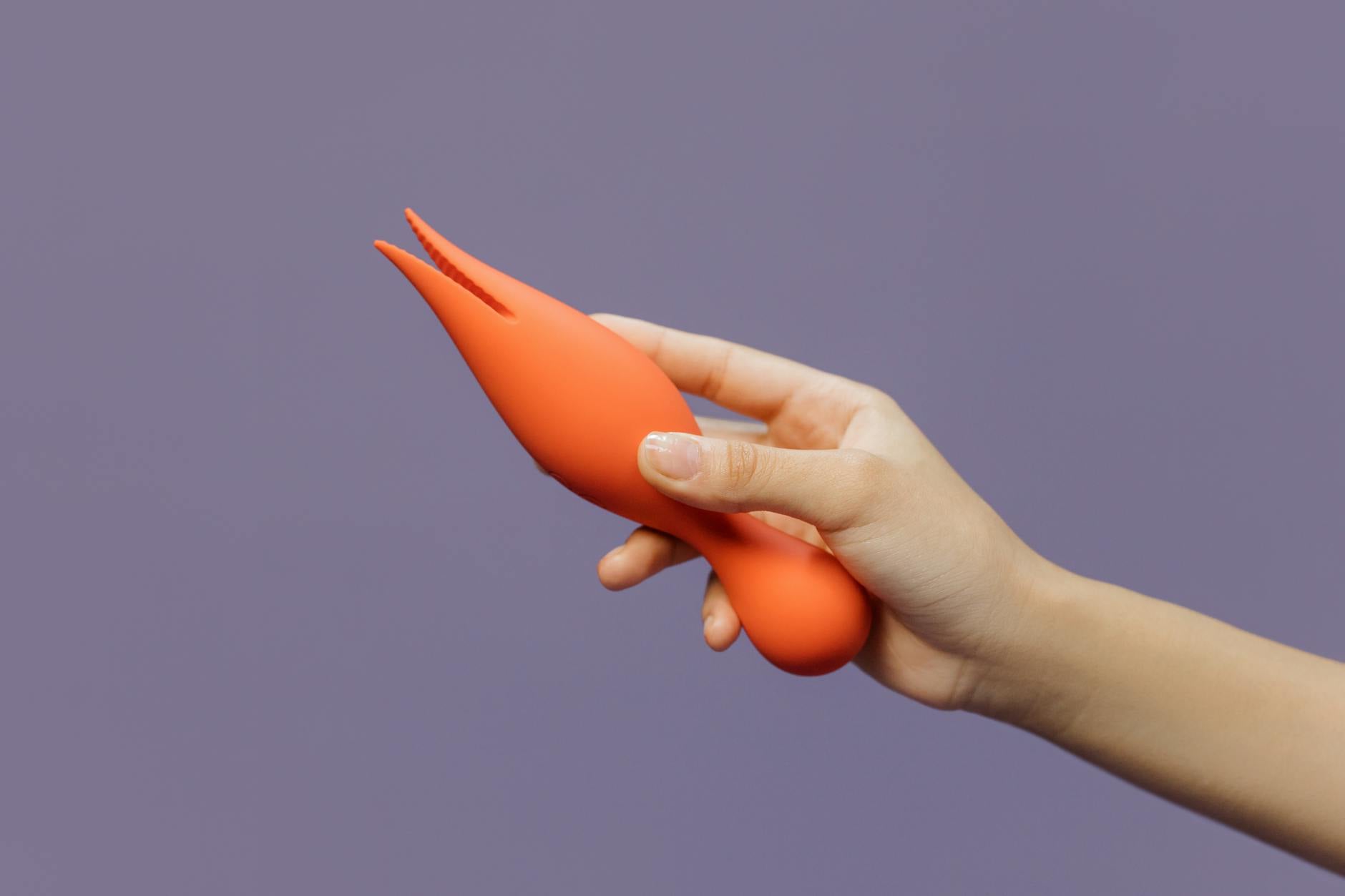
How to Use a Lem Vibrator When Orgasms Feel Different After 40
Let's be real: something shifts around 40. Not vanishes. Shifts.
Your orgasms might feel less sharp, more diffuse. They might arrive later in a session. They might be quieter, or they might feel concentrated in a smaller area instead of radiating outward like they used to. Some people report their best orgasms coming after 40. Others feel a flatness they can't quite name. Both experiences are physiologically normal. Neither one is permanent.
What's not widely discussed is that the orgasm you had at 28 was built on a different neurochemical and hormonal architecture than the one you have at 42. That's not failure. It's just biology doing what it does. And if you know what's actually happening, you can work with it instead of against it.
What actually changes in your body after 40
Here's the science part, short version: blood flow to the clitoris becomes slightly slower to build. Tissue loses some elasticity. Hormone fluctuations (even in people who still menstruate) create variability in sensitivity day to day. The arousal reflex, which used to be almost automatic, now requires more intentional stimulation. And recovery time between orgasms lengthens.
But here's what doesn't change: the clitoral nerve density remains exactly the same. Your brain's capacity for pleasure doesn't diminish. And the orgasm response itself, when it happens, typically involves the same muscle contractions it always did.
What changes is the pathway to get there, not the destination.
Why your orgasms might feel like they're fading (when they're actually just reorganizing)
Three things happen simultaneously, and they compound each other.
First, you're likely distracted. By 40, most of us carry a cognitive load that 28-year-old you couldn't imagine. Relationship shape-shifts, career bandwidth, ageing parents, the ambient anxiety of the news cycle. That mental noise lives in your prefrontal cortex and actively competes with arousal signals. Your brain is physically divided. That's not a sex problem. That's a brain-under-load problem.
Second, you've probably internalized a lot of messaging about what you should be feeling. Maybe partners have changed. Maybe you've heard jokes about libido declining with age. Maybe you've scrolled through enough wellness content to half-believe your body is betraying you. That ambient shame is a genuine neurochemical dampener on pleasure.
Third, the stimulation you used to rely on might not be hitting quite the same way. Fingers alone work differently on tissues that have less collagen. Friction that felt perfect at 32 might feel slightly abrasive now. This isn't permanent or unfixable. It's just different.
When all three converge, it feels like pleasure is leaving. It's actually just asking you to adjust the approach.
Why a Lem Vibrator works better for pleasure at 40 and beyond
Air-suction lemon clitoral vibrators like the Lem work through a fundamentally different mechanism than traditional vibrators. Instead of pure vibration, they use gentle suction and pulsing air waves to stimulate the clitoris. This matters enormously after 40.
Here's why: traditional vibration requires the tissue to accommodate rapid friction. Over time, that can feel numbing or even uncomfortable if sensation has become more sensitive (which it often does). Suction, by contrast, creates a feeling of gentle pulling and release. It engages nerves differently and often feels less intense but more complete. People often describe Lem as feeling less like being buzzed and more like being drawn toward sensation.
For post-40 bodies, that distinction is huge. You're not pushing stimulation into tired nerves. You're inviting the response through a gentler mechanism that often feels more satisfying.
The Lem also gives you control. Most air-suction devices have 10 or more intensity levels. You're not choosing between "off" and "jackhammer." You're calibrating exactly what your body needs today, which might be different from what it needed last week.
How to use the Lem when your arousal is slower to build
Longer foreplay is not a concession. It's an upgrade.
Start with at least 20 minutes of non-genital touch before you introduce the Lem. This sounds like a lot, but it's actually how your body works after 40. Blood is flowing to your skin, your nervous system is shifting into parasympathetic mode, and your brain is slowly clearing the day's noise. By the time you pick up the Lem, you're actually primed instead of forcing it.
When you do introduce it, start at level 1 or 2. Not because you're fragile, but because lower intensity often creates a longer, more building arousal arc. You're not trying to get to orgasm fast. You're trying to stay in the pleasure buildup for as long as possible, because that's where a lot of the satisfaction lives at 40.
Pay attention to what makes the sensation feel good. Some people prefer steady pulsing. Others like the waves that gradually increase in intensity. Some shift between patterns mid-session. There's no right way. There's only what your body is asking for today.
If orgasm doesn't arrive, that's information, not failure. Sometimes at 40 the point is the pleasure of the buildup, not the release. That's neurologically legit and often wildly satisfying if you stop treating it as a consolation prize.
When sensation feels dulled or distant
This is probably the most common complaint I hear from people 40 and older. Stimulation that used to feel electric now feels like touching a numb leg.
Dullness after 40 usually has three sources: stress (your nervous system is genuinely dampened), medication (SSRIs and some blood pressure meds do this), or simply that you haven't had sustained pleasure focus in a while. It's like a muscle that's deconditioned.
With the Lem, start by exploring the sensations slowly. Skip the intensity levels where you usually land. Go lower than you think you need. Let the device work for 3-5 minutes without expecting anything except sensation data. What does this actually feel like on the left side? The right? When you angle the Lem slightly? Where is sensation sharpest?
Often, dullness lifts when you approach pleasure as exploration rather than a performance to complete. The Lem is excellent for this because it's not demanding. It can just... sit there, gently working, while you pay attention.
If numbness persists despite stress reduction and consistent practice, check with a gynecologist. Sometimes reduced sensation points to a medication side effect or a circulatory shift that's easily addressable.
Changing what "intensity" means for you
At 40, intensity isn't always measured the same way.
You might have less full-body response. Your orgasms might be shorter. They might feel quieter. But they might also feel deeper in a way that's hard to name. Some people describe post-40 orgasms as more focused, more contained, sometimes more emotionally significant.
The trap is measuring by the old metric. If your orgasm at 28 was a 30-second full-body event, and your orgasm at 42 is a 15-second concentrated pulse, your brain might read that as "weaker." But you also might feel it more acutely, more present, because you're not dissociating in pleasure.
With a device like the Lem, you have control over what "intense" means. You can chase the old feeling, sure. But you can also experiment with what feels intense now. Sometimes that's a lower setting held longer. Sometimes it's rapid pattern changes. Sometimes it's external stimulation paired with internal focus.
The point is that you're not following a script written for a younger body.
What to know about variability after 40
One day the Lem hits like magic. Two weeks later, the same setting feels pretty meh. This is normal. This is your hormones, your nervous system state, how much sleep you got, whether you're stressed, whether you're in your cycle (if you still cycle). It's not you failing. It's your body being dynamic.
The most resilient approach is to stop chasing consistency and start chasing sensation. Some sessions will be all about clitoral focus with the Lem. Other times, you might want the Lem paired with internal pressure (fingers, a partner, another toy). Some days, the Lem at level 3 feels abundant. Other days, level 7 is what your body is asking for.
This flexibility is actually where a lot of post-40 pleasure opens up. You're not locked into "the way that works." You're continuously discovering what works now.
The emotional piece that matters more than you think
If you're in a partnered situation, your partner's understanding of this shift matters enormously. Sometimes decreased orgasm intensity or longer time to climax gets interpreted as decreased desire, decreased attraction, or that something's wrong. None of those have to be true.
A simple conversation: "My body is responding differently to stimulation, and it's actually normal at this stage of life. I'm exploring what helps me feel good. Here's what I'm learning." That's it. That's the whole conversation.
If you're solo, the conversation is just with yourself. And it's permission. Permission to take 45 minutes if that's what feels good. Permission for pleasure that doesn't lead to orgasm. Permission for the Lem to sit in your drawer for a month because that's where you're at, and then to come back to it fresh.
When to check in with a doctor
If orgasm becomes painful or completely unreachable despite consistent, stress-reduced practice, that's worth mentioning to a gynecologist or sex medicine specialist. Sometimes reduced orgasmic response points to medication interaction, hormonal shifts, or vascular changes that are addressable.
Also check in if sensation changes suddenly rather than gradually, or if you feel numbness alongside other neurological symptoms. The shift we're talking about here is gradual and expected. Sudden change is worth a clinical look.
Otherwise, this is honestly just your body reorganizing. It's not broken. It's transitioning.
How the Lem fits into your pleasure after 40
The Lem works because it meets your body where it actually is now, not where you want it to be. Lower intensity options mean you're not forcing arousal. Air-suction mechanism means you can access sensation through a gentler pathway. Customization means you're not locked into one approach.
But honestly? The tool is secondary to the real shift, which is permission. Permission to slow down. Permission for pleasure that looks different. Permission to explore what feels good now instead of chasing what used to work.
That's where real intensity comes from at 40 and beyond.
People also ask
Is it normal for orgasms to change after 40?
Completely. Hormonal shifts, changes in blood flow, neurochemical rebalancing, and just the reality of an ageing nervous system all affect how orgasms feel. Some people report stronger orgasms after 40. Others report they're less intense but more emotionally present. Both are normal. The research shows that orgasm capacity doesn't decline with age, though the pathway to orgasm often shifts.
Can a clitoral vibrator help if my orgasms feel weaker?
Yes, but not for the reason you might think. It's not that the vibrator adds missing intensity. It's that the right device can access sensation through a mechanism that works better with post-40 physiology. A Lem's air-suction approach, for instance, often feels more complete and satisfying than traditional vibration, especially if sensation has become variable or your arousal curve is slower.
How long should arousal take after 40?
There's no timer. Some days it's 5 minutes. Some days it's 30. The goal isn't speed. The goal is building enough blood flow and nervous system activation that stimulation actually registers as pleasure. Longer arousal phases after 40 aren't a problem. They're an opportunity to extend the good part.
Should I be using a different lemon vibrator at this stage of life?
Not necessarily. What matters is finding a device with flexible intensity options and a stimulation mechanism that works with your body, not against it. A Lem works well because you can dial intensity way down if needed, and the suction mechanism often feels more complete than vibration alone. But the real answer is: whatever device you're curious about, start low and go slow.
What if I'm not having orgasms at all after 40?
That's more common than you think, and it has usually branched into multiple causes. Stress, relationship shifts, medication, hormonal changes, and just the cognitive load of midlife can all suppress orgasm response. Start by identifying what else changed alongside the orgasm. Did stress spike? Did a medication change? Did something shift emotionally with your partner or with yourself? The orgasm change is often the symptom, not the root. Address the root.
Is it okay if the Lem doesn't work for me?
Completely okay. Not every device works for every body. Some people connect better with traditional vibration. Some prefer wand-style stimulation. Some need internal stimulation paired with external. The Lem is great at what it does, but it's one option in a much larger landscape. If it doesn't resonate after patient experimentation, something else will.
The shift your body is making after 40 isn't a decline. It's a reorganization. And when you stop fighting it and start working with it, pleasure often deepens in ways your younger body couldn't access. The Lem is just a tool to help that conversation happen.