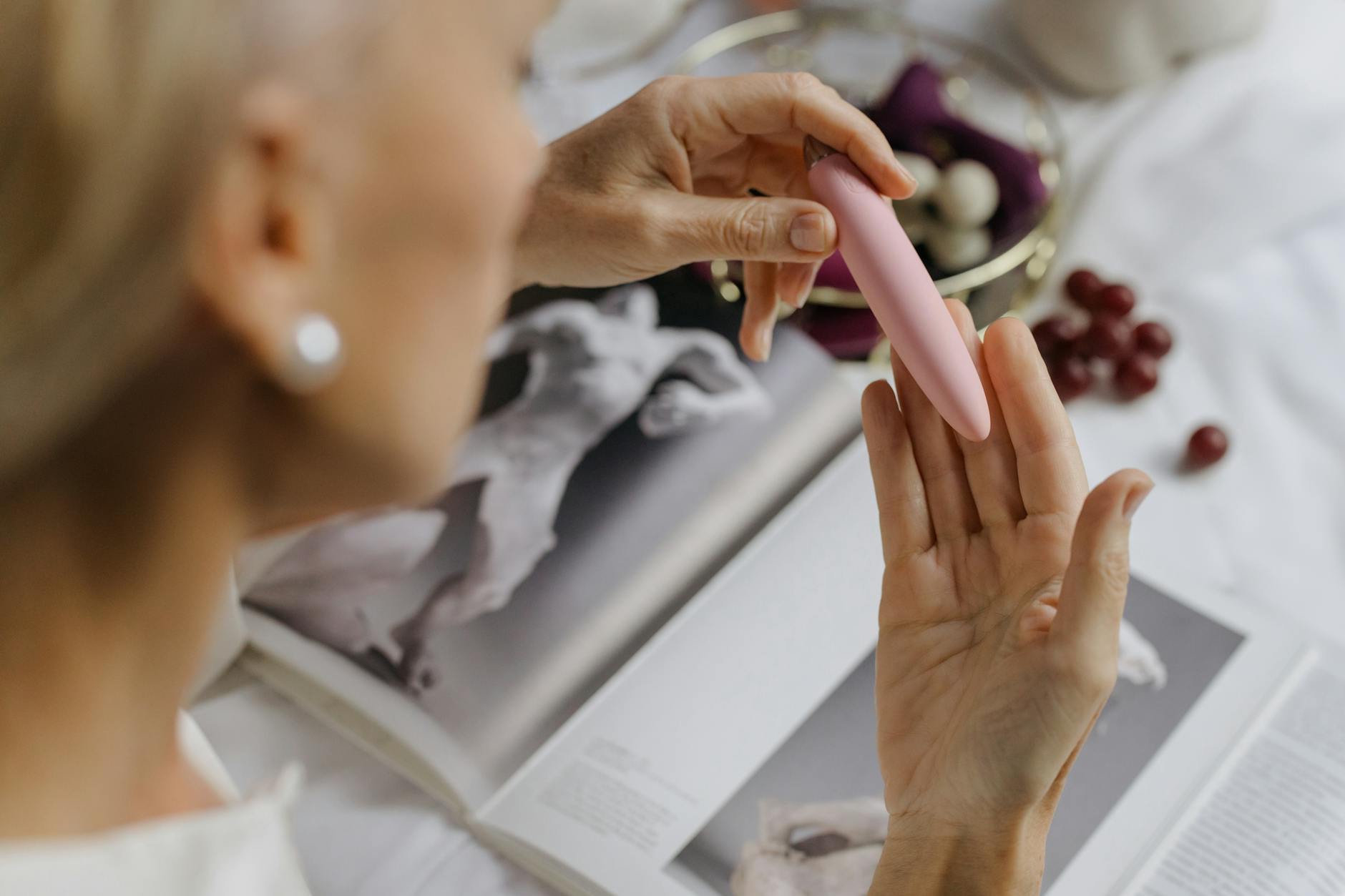
Let's start with the honest part
Medication changes your body. Antidepressants flatten arousal. Birth control shifts lubrication and desire. Beta-blockers mess with blood flow. Antihistamines dry things out. And because no one talks about this openly, you end up assuming something is broken inside you, when really you just need a different approach to pleasure.
Here's what I want you to know: medication-related pleasure changes are real, common, and not your fault. They're also not permanent. What changes is the pathway to arousal, not your capacity for it. And tools like the Lem Vibrator are specifically designed for the kind of stimulation that works when medication has shifted your baseline sensitivity.
How medications actually change sensation
Three main mechanisms are at play.
First, SSRIs and other serotonin-based antidepressants reduce genital sensation by design. They're meant to flatten emotional volatility, and that blunting extends to physical response. The result is slower arousal, difficulty reaching orgasm, or orgasms that feel muted.
Second, hormonal birth control changes blood flow to the vulva and alters vaginal lubrication. Some people adapt within months. Others experience persistent dryness and reduced clitoral engorgement. This isn't a defect—it's a predictable physical shift.
Third, medications that affect blood pressure, thyroid function, or hormone levels (like spironolactone for acne or metformin for metabolism) indirectly reduce the blood flow and nerve sensitivity that arousal depends on.
The good news? Your nerve endings haven't disappeared. Your clitoris is still there. You're not broken. You just need a tool that works with your current neurochemistry instead of against it.
Why clitoral vibrators work better than fingers when medication dulls sensation
When sensation is blunted, direct finger stimulation often feels numb or frustratingly slow. A clitoral vibrator like the Lem uses rapid-fire air-pulse stimulation to activate more nerve endings at once, creating a stronger signal that gets through even when arousal pathways feel sluggish.
Think of it this way: if medication turns down the volume on sensation, vibration doesn't just turn it up. It changes the frequency of the signal itself. Instead of waiting for your body to build arousal gradually through conventional touch, suction-based stimulation (like what the Lem provides) floods the sensory system with intensity that doesn't rely on your baseline sensitivity being high.
This is especially useful if SSRIs have made orgasm feel distant or your hormonal birth control has reduced clitoral engorgement. The Lem's suction patterns can bypass the sluggish arousal phase and activate pleasure more directly.
The reframing that makes all the difference
Here's the mental shift that changes everything: medication-altered pleasure isn't a loss. It's a recalibration.
Your body hasn't betrayed you. Your medication is doing its job (managing your mental health, preventing pregnancy, stabilizing your condition). The trade-off is real, but it's not permanent, and it's not a reason to accept numbness.
Instead of thinking "I used to feel this, now I don't," try "I used to reach pleasure this way, and now I need a different entry point." A Lem Vibrator becomes that entry point. You're not "fixing" anything. You're meeting your body where it is right now.
Many of my clients report that once they accept this frame, the pressure lifts. You stop chasing the sensation you used to have and start exploring what actually works in your current nervous system. Often, that's more satisfying because it's honest.
Practical setup: finding your baseline with the Lem
When you first use a lemon clitoral vibrator after medication has dulled sensation, don't start at medium or high intensity. Start at pattern 1 or 2 on the lowest setting.
Set aside 20-30 minutes with zero time pressure. Medication-related numbness often comes with a side of frustration. Pressure to feel something, to reach orgasm, to "prove" your body still works. That pressure is the second numbness. Drop it.
Begin with the Lem on the lowest setting, light contact (not full suction), and move it slowly across your vulva. Don't look for immediate sensation. Look for change. You might notice a slight tingle, a subtle shift in pressure, a response that's smaller than you remember but definitely there.
Stay there. Build awareness of micro-sensations. After five to ten minutes, increase to pattern 2 if you're ready. The goal is not orgasm this session. The goal is reconnection. Your nervous system is relearning how to respond. That takes patience.
When arousal is slower (and that's completely fine)
If medication has made arousal take longer to build, plan accordingly. Some of my clients find that it now takes 15-25 minutes to feel genuinely aroused, where it used to take five.
That's not a problem. That's information.
Use a water-based lubricant from the start, even if you think you won't need it. Many medications reduce natural lubrication, and you don't want friction to interrupt your reconnection. Glide matters. The Lem works best with adequate lubrication because it creates a seal for the suction effect.
Set a timer for 20 minutes before you expect to orgasm. Use patterns 1-3 on the Lem for the first 10 minutes. Focus on exploration, not outcome. Then increase intensity if your body is asking for it. Many people find that medication-dulled arousal actually benefits from longer buildup time because it allows deeper pressure sensation to develop.
Partner sex after medication changes
If you have a partner, here's the conversation to have: "My medication has shifted how my body responds. We can work around this together, or I can figure out what works for me first and then show you." Both are valid. Your pleasure is not their responsibility, but their patience makes it easier.
Many couples find that introducing a lemon clitoral vibrator into partnered sex actually strengthens connection because it removes the pressure for one person to "make" the other orgasm. Instead, you're both participating in pleasure that's actually working.
You might use the Lem during penetration. You might ask them to hold it while you move. You might ask for space to use it alone while they touch you elsewhere. There's no rule. The rule is: whatever gets you back to genuine sensation, that's the right choice.
When to loop in your doctor
If your medication is causing complete numbness (zero sensation, no desire to have sex at all, orgasm that feels completely inaccessible despite trying different tools), mention it to your prescriber.
This is not complaining. This is important health information. Some doctors will adjust your dose. Some will switch you to a medication in the same class that has fewer sexual side effects. Some will add a second medication to offset the sexual side effects of your primary medication.
You might not want to stop your medication (and you shouldn't, if it's managing something important). But there are often options your prescriber hasn't mentioned because no one asked.
The timeline for reconnection
Don't expect instant relief. If you've been on an SSRI for six months, your nervous system has been recalibrated around reduced sensation. It takes time to rewire. Most people report meaningful change after two to four weeks of regular use of a clitoral vibrator, especially one designed for precision like the Lem.
Some medications (like SSRIs) may show improvement over months as your body adjusts to the drug. Others (like hormonal birth control) may require a different approach until you decide to switch methods or stop.
Patience here isn't weakness. It's the acknowledgment that your body is doing complex chemistry, and forcing it won't help. Meeting it with tools and kindness will.
FAQ: Medication and pleasure
Can I use a Lem Vibrator if I'm on SSRIs?
Absolutely. SSRIs are one of the most common reasons people start using vibrators. The suction-based stimulation of a lemon clitoral vibrator is often more effective than fingers when serotonin reuptake inhibitors have dulled sensation. Start at low intensity and build from there.
Will using a vibrator make medication-related numbness worse?
No. Using a vibrator is not numbing. In fact, the opposite. Regular stimulation with a clitoral vibrator can help your nervous system stay responsive. The concern some people have is that vibration "trains" your body to need it. The research doesn't support that. What it does support is that vibration helps people with numbness and delayed orgasm reconnect to sensation.
How long until medication-related pleasure changes get better?
It depends on the medication and your body. Some people feel improvement within weeks of regular vibrator use. Others see changes over months as their body adjusts to medication, or as their prescriber finds the right dose. If numbness hasn't improved in 4-6 weeks of regular Lem use, ask your doctor if a dose adjustment or medication switch might help.
Is it normal to need a vibrator now when I didn't before?
Yes. Medication changes your baseline. That doesn't mean you're dependent on the vibrator. It means the vibrator is the right tool for your current nervous system. Many people eventually find a balance where they use it sometimes and don't other times. There's no rule about what "normal" is supposed to feel like.
Can birth control-related dryness and numbness go away if I keep using a vibrator?
Vibrator use helps with sensation reconnection, but it won't change hormonal effects like dryness or reduced blood flow to the genitals. If birth control is causing those changes and they're affecting your pleasure, talk to your gynecologist about switching methods. In the meantime, a good water-based lubricant plus a Lem Vibrator can make pleasure feel accessible again.
What if I feel guilty about needing a tool to feel pleasure after medication changes?
That guilt often comes from the idea that "real" pleasure should happen without help. Drop that idea. If glasses help you see, glasses aren't a failure of your eyes. If a vibrator helps you feel when medication has dulled sensation, a vibrator isn't a failure of your body. It's a tool. Your body still works. It just works better with support right now.
What comes next
Medication changes don't have to mean the end of pleasure. They mean a shift in how you access it. A Lem Vibrator is built for exactly this moment: when standard approaches aren't working and you need something that bypasses sluggish arousal and activates sensation more directly.
Start with patience, low intensity, plenty of time, and kindness toward your body. It's not broken. It's adapting. And with the right tool, pleasure is absolutely on the other side of that adaptation.
If medication-related numbness is affecting your relationship or your sense of self, talking to a therapist or sex therapist can help. If it's affecting your health or happiness, talking to your prescriber matters. You don't have to choose between mental health medication and sexual pleasure. There's usually a path forward that honors both.