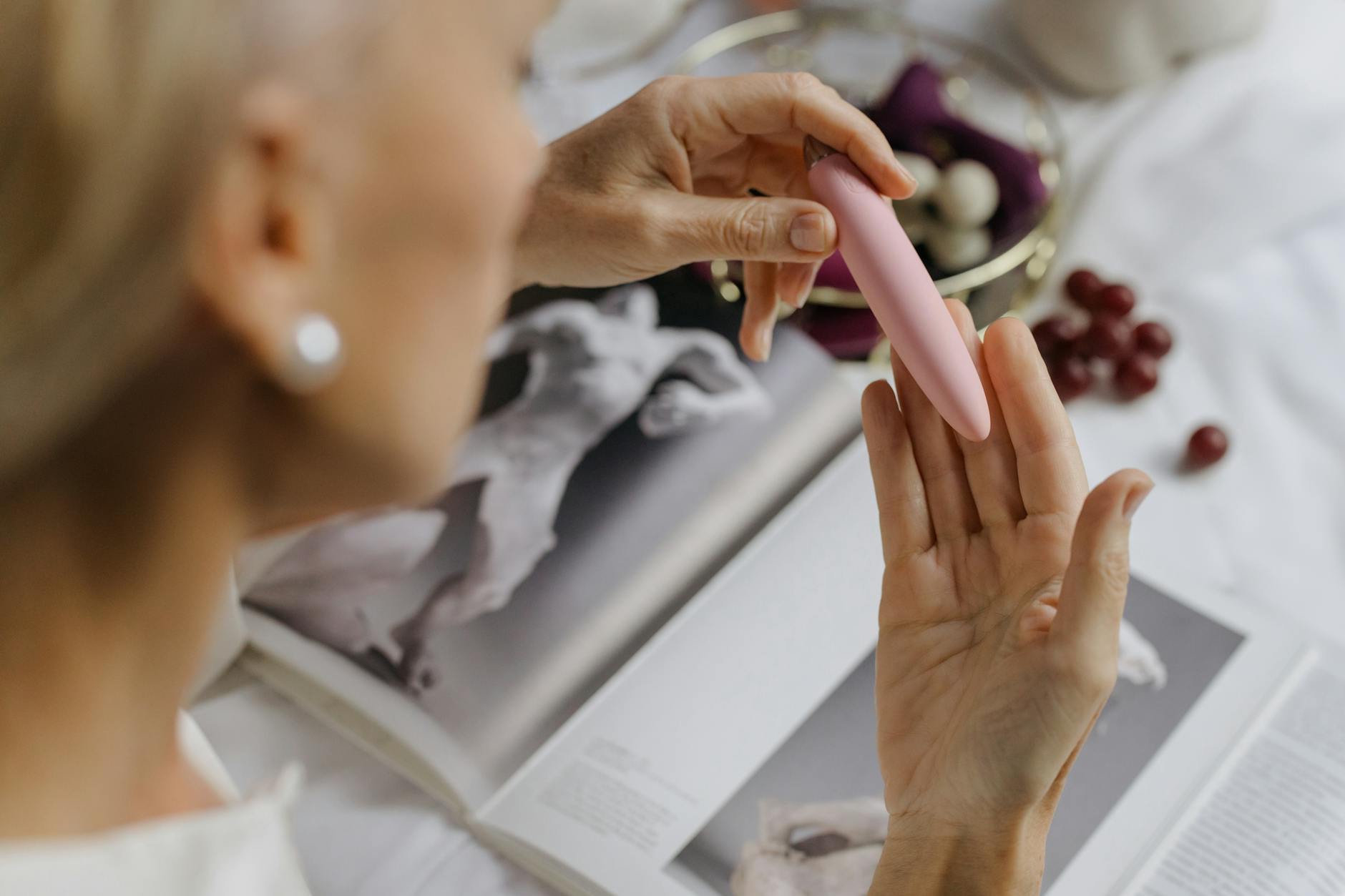
How to Use a Lem Vibrator When Your Body Responds Differently to Stimulation
What used to work stops working. Your clitoral sensitivity shifts with time, hormones, and life stress. Here's how to recalibrate and find what actually feels good now.
Your clitoris doesn't wake up one day and decide to ghost you. But somewhere between your twenties and your forties, between life stress and hormonal shifts and just plain time passing, the sensitivity landscape rewires itself. What felt electric at thirty might feel like an itch at forty-five. Or the opposite: you might suddenly need way more time to warm up, or you might find that direct touch that used to feel amazing now feels too sharp.
When pleasure response shifts, three main things are happening.
First, tissue thickness changes. Estrogen naturally declines over time (whether from age, stress, medication, or hormonal shifts from any cause), and thinner tissue means the nerves sit closer to the surface. This can make touch feel either more intense or weirdly muted, depending on the person.
Second, blood flow patterns change. Arousal requires blood to rush into genital tissue to create swelling and sensitivity. When you're stressed, sleeping poorly, or managing certain medications, that blood-delivery system gets sluggish. Your body isn't broken. Your nervous system is just occupied elsewhere.
Third, the pelvic floor muscles get tighter or more fatigued. Whether from age, having tensed up during years of stress or trauma, or simply holding more tension as life got busier, a tight pelvic floor dampens sensation. It's like trying to feel textures through a clenched fist.
None of this is permanent. None of it means your capacity for pleasure ends. It just means the pathway to get there changes.
If you've used vibrators before and just grabbed the first thing that felt okay, you might not have noticed what intensity actually does. Now you will.
A lemon clitoral vibrator like the Lem has precision settings for exactly this reason. When your body's response is different, you need options.
Pattern 1 or 2 on the Lem is where most people should start if sensation feels muted or if you're working with tissue that's thinner than it used to be. This isn't "low" in the way weakness is low. This is targeted, specific stimulation that wakes up the nerve endings without overwhelming them.
Pattern 3 or 4 works better if you have the opposite problem. You have good sensation but need sustained, rhythmic contact to build toward orgasm. It's not about turning up the volume on pleasure. It's about finding the frequency your nervous system is actually listening to right now.
Speed matters less than pattern. A lot of people think "higher number equals stronger." But rhythm and pulse shape matter way more. The Lem's varied patterns, not just intensity levels, mean you're not just turning a dial up. You're actually changing how the stimulation talks to your body.
Between you and me, if you've got twenty minutes before the time you want to be touched, that's actually perfect. It's not a problem to solve. It's how your body works now.
Arrousal used to be fast because your nervous system was tuned to react quickly. Now it's slower because that nervous system is dealing with email, work stress, family stuff, and possibly just the simple fact that you're older and blood flow works differently.
Start with the Lem at a lower intensity, and focus on the sensation itself rather than on whether you're getting wet or swollen fast. Genuine arousal shows up in a bunch of ways besides those two. Your breathing slows down. Your mind stops racing. Your attention narrows. Those are signs your nervous system is starting to organize around pleasure instead of around daily life.
Give yourself the full arc. Fifteen to twenty-five minutes of gentle, consistent stimulation often builds way better orgasms than five minutes of high intensity followed by frustration.
Water-based lube isn't just nice to have when your body's pleasure response shifts. It's part of your actual toolkit now.
When tissue is thinner, friction from a vibrator alone can feel irritating instead of pleasurable. Lube gives you a buffer. It also helps the Lem glide over the clitoris in ways that feel smoother and less jarring. Silicone lube feels richer and lasts longer, but it can degrade silicone toys, so stick with water-based for your lemon clitoral vibrator.
About a teaspoon on and around the clitoris. Refresh it halfway through if you're going longer than ten minutes. This isn't about creating friction. It's about creating ease. Your body will reward you for that.
Your clitoris didn't shrink. But the most sensitive part might have shifted slightly. What used to feel best when touched directly now might feel better with the vibrator slightly off to the side. The edge of the clitoral hood might be doing more of the work than the glans itself.
This is worth exploring. Spend a session or two just trying the Lem at different angles. Slightly to the left. Directly on top. Over the hood with one layer of skin between you and the vibrator. Some people find that a few millimeters changes everything.
The Lem's design lets you do this without awkwardness. You're not fumbling with something poorly designed. You're just learning your own topography.
If sensation feels numb or muted even with the right lube and intensity, your pelvic floor might be the culprit. Years of stress or tension live in that muscle group. It tightens when you're anxious. It grips when you're trying too hard to orgasm.
Before a session, try this: lie down for five minutes with your hand on your lower belly. Breathe in for four counts. Hold for four. Out for four. On the exhale, actively relax your pelvic floor. Don't clench. Actually release. This signals your nervous system that you're safe and that it's okay to let blood flow down there.
Then use the Lem starting at a lower intensity. The combination of nervous system downshift plus relaxed pelvic floor often unblocks sensation that felt stuck.
If numbness is extreme or doesn't improve, talk to a pelvic floor physical therapist. They can assess whether tension or scar tissue is actually in the way. Lem vibrators are excellent tools, but sometimes the body needs additional support.
If you're partnered, this shift can feel weirdly isolating. Your body is responding differently, and there's often a moment where that feels like a rejection, even though it's not. It's a recalibration.
Honestly though, this is where solo time with a lemon vibrator becomes strategic. When you understand your own pleasure response now, you can show your partner instead of explaining or apologizing. That's the difference between "my body doesn't work the way it used to" and "here's what my body actually enjoys now."
Try using the Lem solo for a session or two. Learn what patterns and angles work. Then, if you want to include your partner, you're coming in with actual data about what feels good. That shifts the whole dynamic from problem-solving to play.
If stimulation feels painful instead of pleasurable, that's worth investigating. Pain during pleasure can signal a few things: nerve irritation from tissue thinning, residual pelvic floor tension, or sometimes early signs of genitourinary syndrome that might benefit from a topical treatment.
A visit to a menopause-trained gynecologist or a pelvic floor specialist can rule out stuff that actually needs attention. Then the Lem becomes part of your solution, not the whole solution.
If pleasure response is flat across the board and hasn't shifted back in a few months, hormonal changes might be at play. That's also worth checking in about. A simple conversation with your healthcare provider can clarify whether supplemental hormone support, stress management, or something else entirely is what you need.
The biggest mistake I see is people treating a change in pleasure response like a failure of their body. It's not. It's an evolution. Every phase of your life gets a different kind of pleasure available to it. The orgasms people report after their bodies have shifted often feel totally different from earlier ones. Sometimes deeper. Sometimes more full-body. Sometimes more emotional.
A clitoral vibrator gives you precision to explore that new territory instead of just frustrating yourself trying to recreate the old one. That's not settling. That's being strategic.
Clitoral sensitivity shifts due to declining estrogen, which naturally thins tissue and affects blood flow to genital areas. Stress, medication, sleep quality, and pelvic floor tension also play major roles. Your nerves aren't damaged. Your body is just operating under different conditions, which means it needs different approaches to pleasure.
Absolutely. Most people do. The pathway might be different. The timing might be longer. The sensation might feel distinct. But the capacity is still there. A well-designed lemon clitoral vibrator like the Lem works precisely because it can deliver stimulation in ways your fingers or older tools can't adjust to match your new response.
Not strictly necessary, but it's genuinely helpful when sensitivity shifts. Thinner tissue benefits from the ease and glide that lube provides. It also prevents irritation from friction that might feel too intense on its own. Think of it as part of your new toolkit, not an admission that something's wrong.
Fifteen to twenty-five minutes is typical for shifted sensitivity. This isn't abnormal. This is just what slower arousal looks like. Use that time for actual pleasure instead of rushing toward orgasm. Many people find that slow warm-ups lead to more intense or satisfying orgasms than rapid escalation ever did.
Start with a lube buffer between you and the vibrator. Try gentler patterns like pulse or rhythm modes instead of steady vibration. You can also hold the vibrator at an angle instead of directly on the clitoris. If it's still too much, talk to a healthcare provider. Sometimes numbing sensation is a sign something else needs attention.
Not in detail. But if you're partnered, it helps to have a simple conversation about "my body responds differently now, and here's what actually feels good." That takes you out of defensive mode and into collaborative mode. Solo exploration with your lemon clitoral vibrator first means you come to that conversation with actual knowledge instead of just frustration.
Your body changing isn't a step backward in pleasure. It's an invitation to learn yourself again. A clitoral vibrator designed for precision, like the Lem, is the tool that makes that learning actually enjoyable instead of frustrating. You're not fixing something broken. You're adapting to something natural. That's where real pleasure lives.