Let's be real about the timeline shift
You used to get turned on in five minutes. Now it takes twenty. That's not a failure, and it's not a sign your body is broken. It's a redirect, and if you understand what's actually happening, a lemon vibrator becomes the bridge that gets you from slow burn to full fire.
The frustration most people feel isn't about the slowness itself. It's about the mismatch. Your partner's ready. Your mind is ready. But your body is lagging, and that gap creates tension instead of pleasure. A lemon clitoral vibrator collapses that gap.
Why arousal ramps up slower now
Three things are usually at work:
Neurological changes. Arousal pathways still work. They just need more activation to fire. Think of it like a car engine on a cold morning. Same engine, different starting conditions. It takes longer to turn over, but once it does, it runs fine.
Hormonal fluctuation. Whether it's age, medication, birth control, or other life factors, hormone levels affect how quickly blood rushes to genital tissue. Lower estrogen especially slows the response cascade. This isn't permanent or insurmountable. It's anatomical.
Attention fragmentation. Here's the part nobody talks about. Slow arousal often happens because your brain is still half-paying attention to something else. The laundry. Work tomorrow. Whether the door is locked. You're not fully there yet, even if you think you are.
How lemon vibrators short-circuit the wait
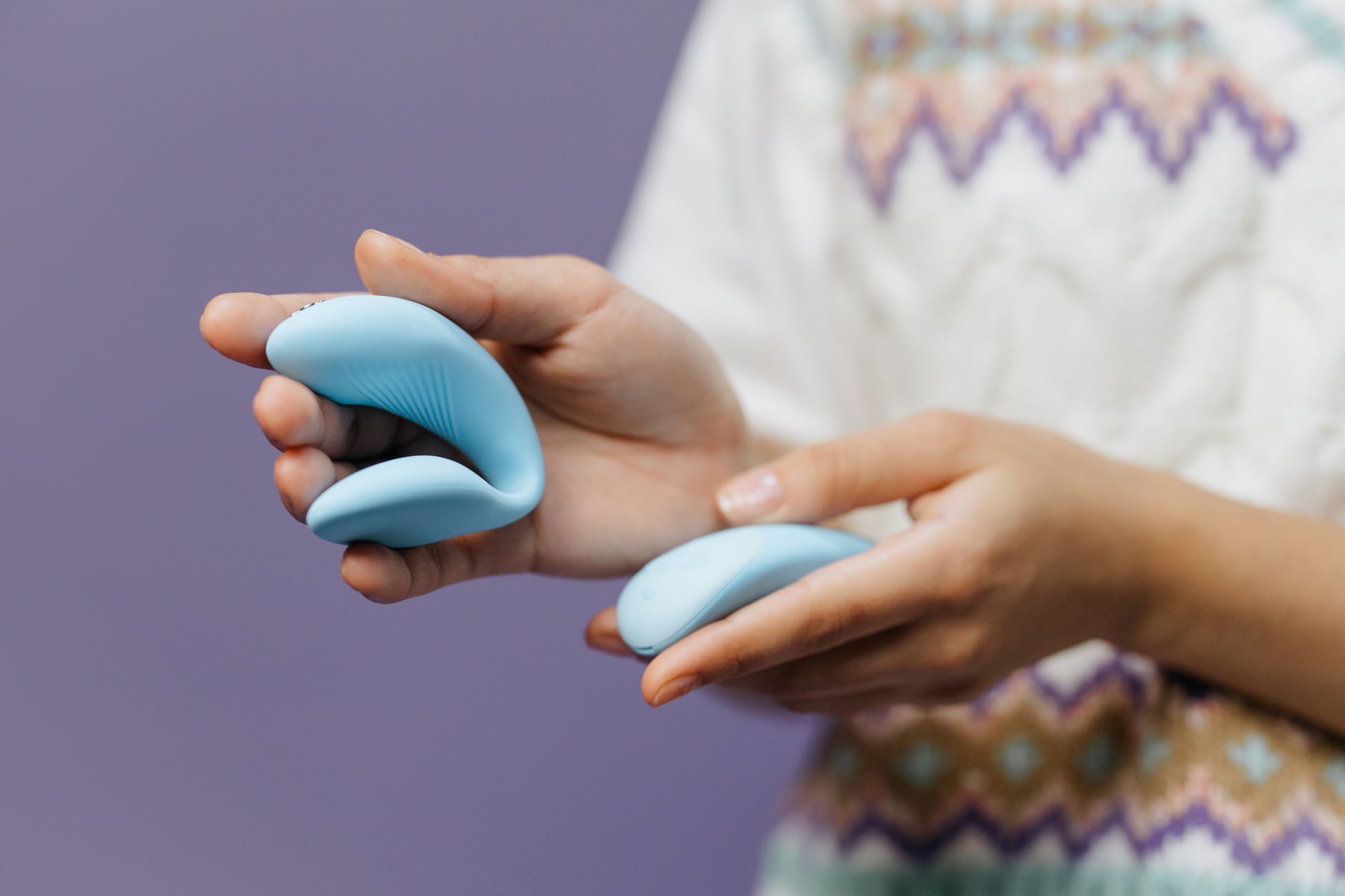
A lemon sucker like the Lem works faster than fingers or a partner's touch alone because it delivers consistent, precisely-targeted stimulation that bypasses the slow buildup phase. You're not relying on spontaneous arousal. You're introducing arousal directly.
Here's the mechanical part: suction stimulates the thousands of nerve endings in and around the clitoris all at once, without the variable pressure or friction of manual touch. That concentration of stimulation wakes up your nervous system faster.
But here's the real part: knowing you have a tool that works reliably removes the psychological load of wondering "will this work, will this happen, am I broken." That confidence itself accelerates everything. Half of slow arousal is anxiety about slow arousal.

Photo by Enric Cruz López on Pexels
The extended foreplay strategy
If you're building arousal slowly, stretching foreplay isn't torture. It's wisdom. Budget fifteen to twenty minutes before you even introduce the vibrator.
Start low-key. Your partner touches you, you touch yourself, you kiss, you build anticipation. This isn't "wasting time." Blood is rerouting. Nerve endings are waking up. Lubrication is beginning. All of this takes time and all of it matters.
Introduce the Lem early, but not on the highest setting. Many people make the mistake of jumping to pattern intensity 3 or 4 when they're still in the warm-up phase. Start at level 1. Let your body recognize the sensation, adjust to it, enjoy it. There's no prize for reaching maximum speed fastest.
Alternate between partner touch and vibrator. Five minutes of your partner's hands. Then two minutes with the lemon vibrator on the gentler setting. Then back to hands. This variation prevents desensitization and keeps your nervous system engaged.
Build the pattern intensity slowly. If you start at level 2, you can only go up to 4 or 5 before you're maxed out. You've compressed your entire journey. Instead, start at 1, stay there for a couple of minutes, move to 2, pause, then 3. This trajectory gives your body room to respond at each stage.
The role of lubrication
Slow arousal often means slower natural lubrication, too. Don't skip this. Water-based lube isn't a sign that something's wrong. It's a practical choice that lets the lemon vibrator glide smoothly and keeps tissues comfortable.
Apply lube before you start, not halfway through when friction starts feeling off. It changes the entire sensation landscape. With lube, the suction feels fuller. Without it, you might feel friction or pressure instead. The difference is night and day.
When slower becomes an advantage
Once you accept that arousal takes longer, something unexpected often happens: the experience becomes richer. You're not racing to a finish line. You're actually present for the buildup. Sensations that used to blur together now register individually.
Many people report that orgasms that arrive after a long, slow climb are more intense than the quick ones used to be. Your nervous system has time to fully activate. There's more to release when you finally let go.
The conversation with your partner
If you're with someone, this is crucial: name what's happening. "My arousal is slower now" is a factual statement. It doesn't mean your partner isn't attractive. It doesn't mean the relationship is in trouble. It means you're changing, your body is changing, and you both get to adapt.
The best partners respond to this by reframing foreplay as the main event, not the opening act. A lemon vibrator becomes a shared tool, not a workaround. You're not trying to fix yourself. You're trying to enjoy sex together in a way that actually fits where you both are now.
Pacing and patience
Resist the urge to force faster arousal. The more you pressure yourself, the longer it actually takes. Pressure triggers cortisol. Cortisol suppresses arousal. You've created a loop that works against you.
Instead, commit to the timeline. If it takes twenty minutes, let it take twenty minutes. That's not slow. That's foreplay. Your body will reward you with more intense sensation, more explosive orgasms, and genuine pleasure instead of performance-anxiety sex.
A lemon clitoral vibrator is built for exactly this situation. Reliable. Consistent. Patient. You get to match your own pace.
FAQ: Slow arousal and lemon vibrators
Does using a vibrator make my arousal slower over time?
No. Your nervous system doesn't "get used to" a vibrator the way a medication builds tolerance. What happens is the opposite. Using a vibrator correctly actually trains your nervous system to respond more easily. You're building a connection to sensation, not exhausting it. That said, using the same pattern at the same intensity every single time can feel repetitive. Vary the settings, the patterns, the timing, and the context.
If arousal is slow, does that mean my libido is dying?
Libido and arousal speed are different things. You can have strong desire but slow arousal. You can have fast arousal but low overall interest. Slow arousal is usually about access (how quickly your nervous system ignites), not about whether the fire is still there. Address the access with foreplay and tools like a lemon vibrator, and you'll likely find the desire hasn't gone anywhere.
Should I use the lemon vibrator on myself first, or with a partner?
Both are useful for different reasons. Solo use teaches you what works for you, what settings feel best, and how long your specific buildup takes. That knowledge is gold when you're with a partner. With a partner, the vibrator becomes a shared experience. Neither is more "correct." Start solo if you want to learn the landscape. Use it with a partner when you're ready to integrate it into partnered sex.
Can a lemon sucker actually make arousal faster, or is it just distraction?
It's not distraction. The suction-based stimulation of a lemon vibrator activates more nerve endings simultaneously than manual touch alone. That's measurable. It doesn't work by tricking you. It works by delivering more direct stimulation to sensitive tissue. Some people respond to that immediately. Others still need a fifteen-minute warm-up, but they'll reach arousal more completely when the vibrator enters the scene.
What if the vibrator feels too intense when I'm still in the slow-arousal phase?
Start at the lowest setting. Seriously, level 1 is where most people should begin, not halfway through. If even level 1 feels intense, you might be introducing the vibrator too early. Back up to ten more minutes of hands-on foreplay, then try again. You're not racing.
Is slow arousal a sign of a relationship problem?
Not necessarily. Sometimes it is. Sometimes it's hormonal. Sometimes it's stress. Sometimes it's medication. Sometimes it's all of the above. If slow arousal arrived suddenly alongside other relationship friction, that's worth exploring together or with a therapist. But slow arousal on its own is a physical phenomenon with practical solutions. Address it mechanically first (foreplay, tools, lubrication, patience), and relationship patterns will become clearer.
The bottom line
Arousal that takes longer isn't a problem waiting to be solved. It's a different rhythm waiting to be understood. When you stop fighting the timeline and start designing your experience around it, a lemon vibrator shifts from being a workaround to being a reliable tool that delivers what you actually want.
The goal isn't to rush back to the five-minute arousal of your twenties. The goal is to have satisfying, present, full-bodied sex right now. That almost always takes more time than you think it should. But it also almost always delivers more than you expect.