Let's start with what's actually happening
Touch overload is not in your head. When everything feels too much—a partner's hand, direct contact, even the thought of stimulation—your nervous system is sending a legitimate alarm signal. This isn't low desire. This is sensory defensiveness, and it's often a sign that your body is working harder than it should be to regulate itself.
Here's what you need to know: a lemon clitoral vibrator can actually help rewire this response, but only if you approach it differently than you would a partner's touch.
Why regular touch feels like too much
There are three common causes, and they're not all about trauma or stress (though those matter too).
First, your nervous system might be in a heightened state. Chronic anxiety, ongoing relationship conflict, or sustained stress keeps your fight-or-flight response activated. When you're already on high alert, any input feels amplified. A partner's hand that normally feels good now registers as intrusive. This is your system protecting you, even when protection isn't what you need.
Second, you could be experiencing what's called allodynia. That's a clinical word for "normal touch feels painful." It happens after pelvic floor tension, prolonged numbness, or even extended periods without pleasure. Your nerve endings get confused about what's safe. A light touch triggers alarm bells.
Third, you might have developed an anticipatory wince. If you've had painful sex, numbed sensation, or pressured intimacy, your body learned to tense up before touch even happens. You're protecting yourself preemptively. Your partner notices the tension, adjusts their pressure, which somehow makes it worse because now everything feels loaded and self-conscious.
Why a lemon clitoral vibrator is different from a hand
This matters: a vibrator is not a more intense version of touch. It's a completely different sensory input.
When a partner touches you, their hand carries intention, weight, and unpredictability. Even gentle touch involves pressure, temperature change, and the knowledge that someone else is controlling the sensation. Your brain processes all of that. Your nervous system is always predicting what comes next.
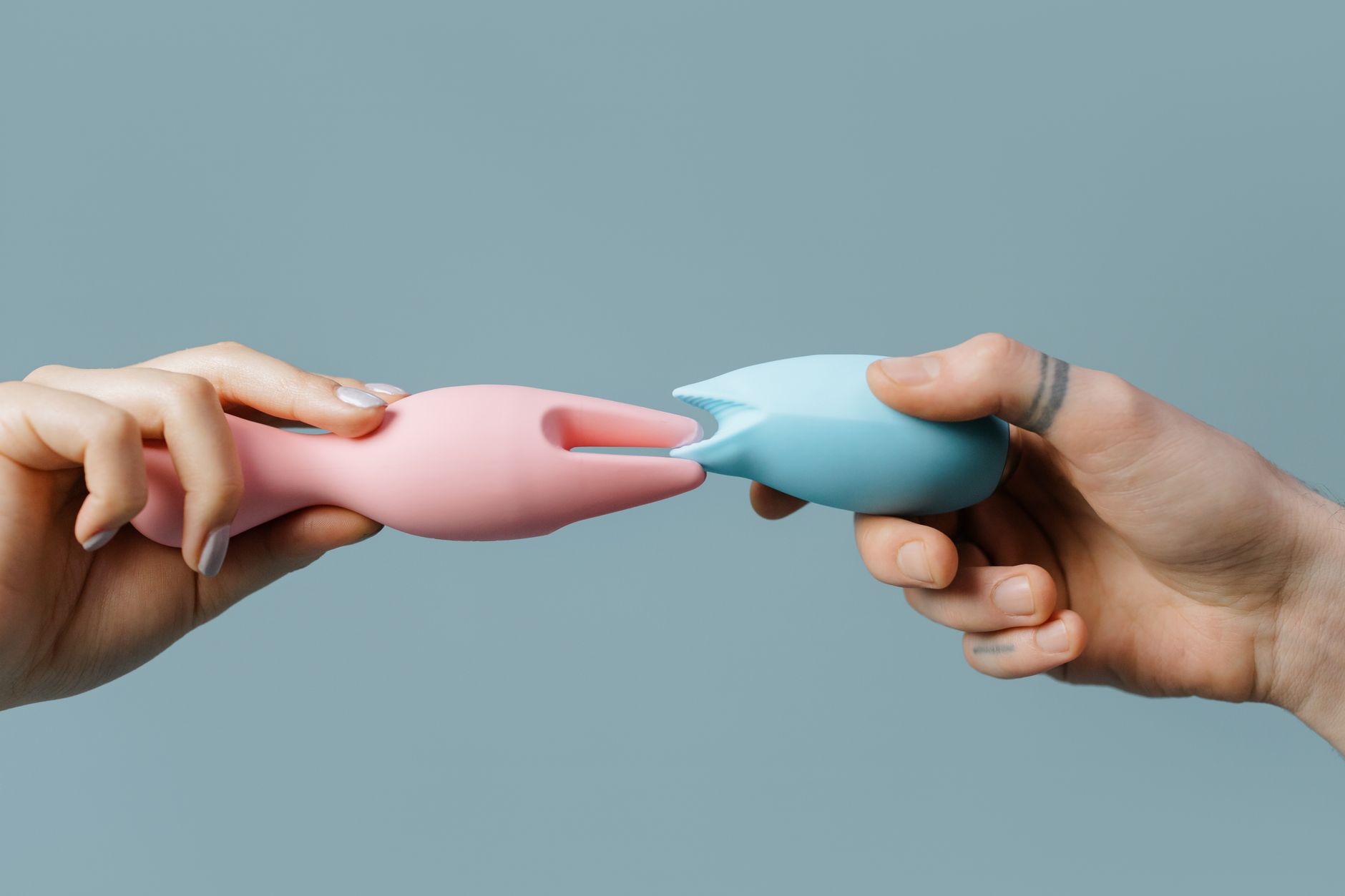
A lemon vibrator—especially one with suction technology like the Lem—delivers sustained, rhythmic stimulation without variation. The pattern stays the same. The pressure is consistent. There's no surprise, no intention to decode, no body-read. You're not tracking a partner's response or worrying about their pleasure. The sensation is exactly what it was one second ago and will be the same one second from now.
For a nervous system in overdrive, that predictability is calming. It's easier to relax into than hand touch because there's less to monitor.
Building tolerance, step by step
If you've been avoiding touch altogether, don't jump straight to a vibrator on high. That defeats the whole point. You're retraining your nervous system, which takes patience.
Week one: external exploration only. Use a lemon vibrator on the lowest setting, on the outside of your labia—not directly on the clitoris. Spend five minutes, three times that week, just feeling the buzz against your outer body. No expectation of arousal. No goal of orgasm. You're teaching your body that vibration is safe.
Week two: brief clitoral contact. Move to the clitoral area, still on the lowest setting, but only for 30 seconds to two minutes per session. You're not trying to come. You're trying to let your body register the sensation without freaking out. If it feels overwhelming, step back to week one for another few days.
Week three: extended sessions. Stay at the lowest setting but spend 10 to 15 minutes. Let yourself explore what happens when you're with the sensation longer. Often, the first few minutes feel intense, and by minute five or six, your nervous system settles. That settling is the whole goal.
Once you can spend 15 minutes without tension or dread, you've got your baseline. From there, you can slowly experiment with higher intensities, but never rush it.
The nervous system reset you probably need
Using a lemon vibrator is only half the equation. Your nervous system needs to downregulate, and that happens outside of sex too.
During the weeks you're rebuilding pleasure, pay attention to what calms your nervous system during the day. This might sound unrelated, but it's not. If you're spending eight hours tense, anxious, and reactive, your body won't suddenly relax at the mention of intimacy. A few small changes help:
Movement matters. Not exercise in the aggressive sense, but walking, stretching, dancing, or swimming. Any rhythmic movement that lets your body discharge tension. Aim for 20 to 30 minutes most days.
Breath work before touch. Spend five minutes with slow breathing (four counts in, six counts out) right before you use your lemon vibrator. This signals your parasympathetic nervous system that it's safe to relax.
Consistent sleep. I know this sounds obvious, but touch sensitivity goes haywire when you're sleep-deprived. Your nervous system is already strung out. Aim for seven to eight hours.
What to tell a partner (if you have one)
This is the part that often goes sideways. Your partner might interpret sensation overload as rejection. They might think you don't want them, or that something they did broke the intimacy. It's worth naming directly.
"My nervous system is in overdrive right now. That's not about you. I'm using a tool to help me recalibrate, and I need a couple of weeks where we keep physical touch minimal. This actually helps me want to reconnect with you eventually." Most partners get it when they understand it's about nervous system regulation, not about them failing you.
You might also give them a job. If they're feeling helpless, invite them to sit nearby while you use your lemon vibrator. They're not touching you. They're just present. That can rebuild sense of safety and connection without the overwhelm.
When to know you're ready for the next phase
You'll know you're recalibrating when you can spend 15 to 20 minutes with your vibrator and feel relaxed afterward, not jangled. When the thought of it doesn't trigger dread. When you're getting aroused, even if you're not having orgasms yet. That's your sign that your nervous system is learning to receive sensation again.
Only then does it make sense to explore partner touch, and you do that slowly too. Start with hand-holding. Then a hand on your shoulder. Then a hand on your thigh. The same predictability principle applies. Slow, consistent, no surprises.
Let's be real: some people rebuild pleasure with a vibrator faster than they do with a partner. If that's you, that's worth paying attention to. It might mean you need a break from partnered sex while you heal. It might mean there's something about the relationship dynamic that needs fixing. Either way, your clitoral vibrator is telling you something important about what your body needs right now.
Questions people ask about sensation intensity
What if even the lowest setting feels too overwhelming?
Turn the vibrator on, then hold it in your closed fist first. Let the vibration travel through your hand before direct contact. You're diffusing the intensity. Or use it over your underwear or a thin layer of fabric. The barrier reduces sensation while your nervous system adjusts. As you get comfortable, gradually remove layers.
Can touch overload go away permanently?
Yes, but it requires working on the underlying cause. If it's stress and nervous system dysregulation, breathing work, sleep, and movement genuinely help. If it's from trauma or relationship damage, working with a therapist alongside the vibrator practice speeds things up. The vibrator is a tool, not a cure. It's part of the solution.
Is it normal that I have zero orgasms during this phase?
Completely normal. Your brain is processing safety, not pleasure. Orgasm often comes later once the nervous system stops treating touch as a threat. Don't make orgasm the goal right now. Make relaxation the goal. Pleasure follows.
Should I avoid partnered sex entirely during this reset?
Not necessarily, but be intentional. Penetration without clitoral touch might be fine. A partner using a lemon vibrator on you is often better than their hand because of the predictability factor. What you want to avoid is the dynamic where your partner is trying different things, gauging your response, and adding pressure. That's what keeps your nervous system fired up.
What if my partner gets frustrated with the slow pace?
Then you have a relationship conversation that's bigger than pleasure. A partner who can't be patient while you heal is showing you something important about whether they're willing to prioritize your wellbeing. This isn't about them being bad people. It's about compatibility in that moment. Some couples need outside support. Consider talking to a relationship coach if the tension is high.
How long does this usually take?
Three to eight weeks is typical for basic nervous system recalibration. Deeper healing takes longer. But most people notice a shift in how they experience their body within two to three weeks if they're consistent and patient. The key is consistency, not intensity.
The bigger picture
Using a lemon clitoral vibrator when touch feels overwhelming is not a workaround. It's a legitimate therapeutic tool. Your body is smart enough to know when it's safe and when it's not. Right now, it's not registering safety. A vibrator helps retrain that response because it removes the variables that keep your nervous system on high alert.
But the vibrator only works if you're also addressing the stress, the relationship dynamics, or the trauma underneath the sensation overload. Use it as part of a bigger picture of nervous system healing. If you're stuck after a few weeks, or if the overwhelm is tied to trauma, reach out and let's talk about what support might help. You don't have to figure this out alone.