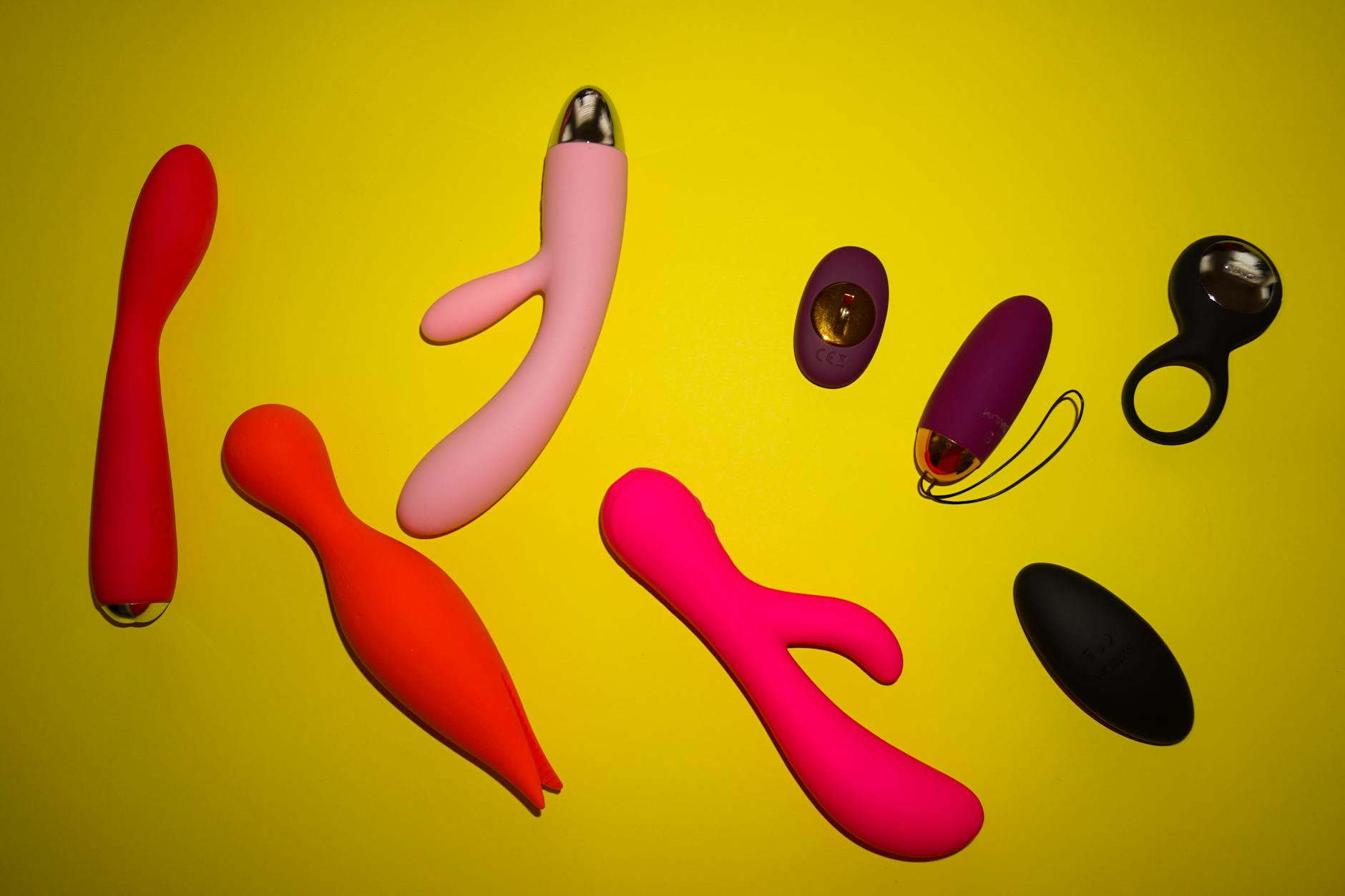
Here's what nobody tells you about perimenopause and pleasure
Perimenopause is not menopause. It's the decade (or more) when your body is deciding whether it's actually going to stop cycling. Estrogen and progesterone ping-pong around like they're on different schedules. One month your pleasure feels exactly like it always has. The next month, your lemon vibrator settings feel completely different. That's not you being broken. That's your hormones being unpredictable.
Let's be real: most guides about perimenopause and pleasure treat it like a medical emergency. It's not. It's a recalibration. And if you're using a lemon clitoral vibrator, you actually have a huge advantage because you can micro-adjust your approach based on what's happening this cycle.
What perimenopause actually does to your body
Your ovaries are winding down, but they're not doing it on a schedule. Estrogen and testosterone both drop overall, but not evenly. Some cycles they're relatively stable. Other cycles they plummet, then come back up. This makes perimenopause feel like your body is playing a prank on you.
Here's what happens to sensation and arousal:
Tissue thickness changes. The vaginal and vulval tissue that's been plump and sensitive starts to thin slightly. You might notice that direct clitoral touch feels either more intense or less pleasant depending on the week. Lubrication becomes less automatic. Your body might still produce it, but the timing might shift. You might need more warm-up time, or you might need external lubricant even on days when you didn't before.
Blood flow patterns shift. Arousal isn't just mental. It's physical. Hormones regulate how much blood flows to your genitals when you're turned on. When hormones are fluctuating, that response can feel unpredictable.
But here's the part people skip: your nerve sensitivity doesn't change. Your clitoris has 8,000 nerve endings whether your estrogen is at 50 or 500. The pleasure capacity is still there. The pathway is still there. What changes is the friction, the timing, and the warm-up.
Why a lemon vibrator works better during perimenopause
A lemon sucker like the Lem uses air-pulse suction instead of vibration. That matters now more than ever.
Traditional vibrators require consistent clitoral contact. They work by creating sensation through direct stimulation. That's fine when tissue is thick and resilient. During perimenopause, when tissue is thinner and more sensitive to direct pressure, that constant buzz can feel overwhelming or even slightly uncomfortable.
Suction-based stimulation like a lemon vibrator works differently. It creates a pulse of pressure and release. That pulsing rhythm mirrors the way your body naturally responds to arousal. It doesn't require the same sustained pressure. You get intense sensation without the friction-fatigue that can come from traditional vibration.
Many people find that their lemon clitoral vibrator becomes more comfortable during perimenopause, not less. Because the mechanism doesn't rely on direct contact pressure, it adapts better when tissue sensitivity shifts.
How to adjust your lemon vibrator practice as hormones shift
Start lower than you think you need to. If you've been using pattern 4 or 5 on your Lem, try dropping to pattern 2 or 3 for a cycle and see how it feels. Your tissue might be more responsive right now, which sounds great until you realize it means you can overstimulate faster.
Watch for the week before your period. Hormones bottom out right before menstruation, and that's often when tissue sensitivity is highest. That's when you might need more lube, longer warm-up, or gentler intensity. It's not permanent. It's just that week.
Lubrication becomes your strategic tool. Water-based lube is now a regular part of your practice, not an occasional thing. This isn't because anything is wrong. It's because thinner tissue benefits from extra glide. Use it on the head of your lemon vibrator, not just internally. The suction head works better with a thin layer of lube.
Increase your warm-up window. Before you reach for your Lem, spend 10 to 15 minutes on foreplay. That might be touching, kissing, fantasy, or external touch without the vibrator. Your body needs more time to signal arousal now. Blood flow takes longer to build. Your clitoris needs time to respond. This sounds like extra work. It's actually permission to slow down.
Experiment with positioning. Some angles create more pressure than others. If direct contact feels too intense, angle the suction head slightly off-center. The sensation changes completely. You still get the benefit of suction without the hard-on feeling.
Rotate your patterns intentionally. Don't just go to your favorite setting every time. Try patterns 1, 2, and 3 throughout the month. Your body's preference might shift week to week right now. Staying flexible means you stay engaged instead of frustrated.
The conversation with your body (not your partner)
Perimenopause is the moment a lot of people stop checking in with their own pleasure. They assume something is wrong and give up. This is the exact moment to get more curious instead.
What feels good this week might feel different next week. That's not a failure. That's information. Paying attention to what's shifting teaches you about your body in ways you never would have otherwise.
If you're with a partner, this conversation is important but separate from the "What do you need from me physically" conversation. The internal shift is about you understanding your own body. The partnership shift is about communicating what that means together. Don't collapse them into one awkward talk. Have them separately.
Your pleasure doesn't diminish during perimenopause. It transforms. The intensity might shift. The timing might shift. The pathway to orgasm might shift. But the capacity for pleasure, the nerve density, the brain's ability to experience sensation. All of that stays put.
When to add extra support
If you're noticing pain or significant discomfort (not just sensitivity, actual discomfort) when using your lemon vibrator, it's worth checking in with a doctor. Genitourinary syndrome of menopause (sometimes called GSM) can start in perimenopause. It's very treatable. Topical estrogen creams work quickly and have minimal systemic absorption. You don't have to live with discomfort.
If you notice your desire has dropped significantly and it's staying low, that's also worth mentioning to a healthcare provider. Sometimes it's just perimenopause. Sometimes it's thyroid. Sometimes it's depression or relationship friction wearing a hormonal disguise. A good doctor helps you figure out which one.
And if you're genuinely curious about whether testosterone therapy might help (yes, testosterone therapy exists for this), that's a conversation you can have. It's not common in the US, but it's available. Your pleasure matters enough to ask.
The framework that works
Perimenopause is not a waiting room before menopause. It's an active season of your sexual life. You're not heading toward the end of pleasure. You're moving through a transition inside it.
Your lemon vibrator adapts with you. The suction mechanism, the flexibility of patterns, the precision of intensity control. These are tools that work better during hormonal flux, not worse. You just have to know how to use them as your body shifts.
The best version of your pleasure during perimenopause isn't the same as the best version at 25 or 30. It's different. And different, it turns out, is often better. You know your body better. You know what you want. You've stopped performing and started enjoying. That might be the most valuable shift of all.