
Let's name what's actually happening
One-sided foreplay isn't about laziness or lack of attraction. It's usually about invisible scripts. One partner defaults to giving because they were socialized to prioritize their partner's pleasure. The other partner receives because they've never had to ask. No one's being mean. Everyone's stuck.
Here's the thing though. A lemon vibrator doesn't just solve the immediate problem (unequal touch). It solves the relational one. It shifts who's responsible for your pleasure from "my partner" to "me and my partner together."
Why one-sided foreplay happens
Most people grow up with an unspoken rule: one gender gives, the other receives. Women are taught their pleasure is a bonus feature. Men are taught that providing pleasure is their job. Neither script includes the possibility that both people might want to be touched, want to initiate, and want to receive.
Then you get to adulthood and wonder why foreplay feels exhausting for one person and passive for the other.
The research backs this up. Studies on sexual satisfaction in long-term partnerships consistently show that when one person carries the mental load of "remembering to touch my partner," resentment creeps in. That person starts feeling like they're performing rather than connecting. The other person starts feeling guilt they can't quite name.
A lemon clitoral vibrator breaks this pattern because it removes the pressure from your partner to be your primary source of pleasure. Which sounds like it would create distance. It actually creates freedom.
How a lemon vibrator rebalances the dynamic
When you bring a tool into foreplay, three things shift immediately.
First, responsibility becomes shared. You're no longer waiting for your partner to touch you "the right way." You're using a device that knows exactly what you need. Your partner can then engage with your pleasure instead of managing it. They watch, they participate, they contribute without carrying the whole weight.
Second, initiation becomes mutual. If you typically receive and rarely initiate, using a lemon vibrator during foreplay means you're now actively doing something. You're not waiting. You're participating. Your partner might find this wildly attractive, by the way. There's something magnetic about watching someone confident in their own pleasure.
Third, conversation becomes inevitable. The moment you introduce a vibrator, you have to talk about it. "Do you like this?" "Want to try a different setting?" "What if we both...?" That conversation opens the door to other conversations you've probably been avoiding. "What do you actually want during foreplay?" "What have you been too shy to ask for?"
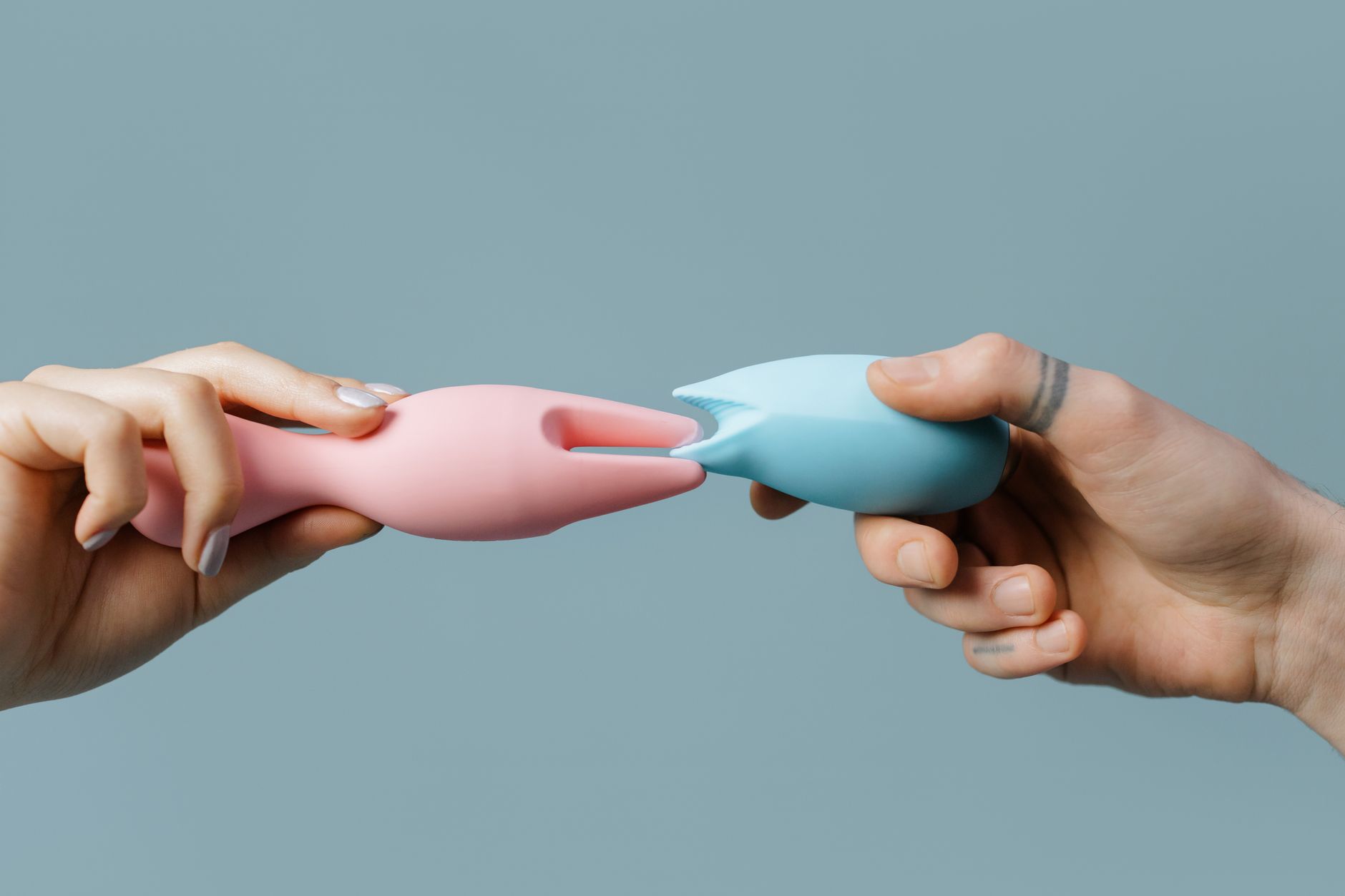
Photo by cottonbro studio on Pexels
The practical steps
Start with your own pleasure as the anchor, not your partner's response. Here's how:
Use it solo first. Spend a few sessions with your Lem (the lemon clitoral vibrator) alone so you know what feels good. Not for a"test run." But to understand your own preferences fully. Which patterns do you prefer? Which intensity? How long does it take to get you to the edge? This knowledge is power in partnered sex because you're not figuring it out in real-time with an audience.
Introduce it without drama. "I want to explore something new during foreplay" is enough. You don't need to explain why you want it or what you're "missing." You're not admitting failure. You're trying something.
Use it while your partner participates. This is key. Don't use the vibrator instead of your partner. Use it alongside them. They kiss your neck while you use the vibrator. They touch your thighs. They watch your face. They're present. The device handles one job. Your partner handles everything else.
Let them try different roles. Maybe they hold the lemon vibrator while you guide the speed and pressure. Or they control the pattern while you focus on other sensations. This turns it into a collaboration, not a replacement.
Ask for what you want. This is uncomfortable. Do it anyway. "I like it when you touch my body while I'm using this" or "Can we slow down my orgasm instead of rushing to the end?" or "I want more foreplay before we move to anything else." Your partner can't rebalance something they don't know is unbalanced.
What changes when you do this consistently
After a few sessions where you're actively involved in your own pleasure and your partner is actively involved in supporting that, the dynamic shifts. Foreplay stops feeling like a performance. It feels like something you're both doing for the sake of connection, not because someone has a job to do.
You might also notice your partner relaxes. When they're not responsible for "making you feel good," they can actually enjoy you. They can be curious about what you like instead of anxious about whether they're doing it right.
And you might notice you want to reciprocate differently too. Not out of obligation, but out of genuine desire. That's the difference that matters.
The conversation that needs to happen
This isn't really about the lemon vibrator. It's about telling your partner "my pleasure matters as much as yours." And giving them permission to say "my pleasure matters too, and I want us to figure out how to both feel like we're giving and receiving."
If your partner resists the idea of you using a vibrator, that's worth exploring. Sometimes it's insecurity (they feel replaced). Sometimes it's a control thing. Sometimes it's just unfamiliarity. A good conversation might sound like: "This isn't about you not being enough. It's about me taking responsibility for my own pleasure, which actually makes sex better for both of us."
If the resistance feels deep, that might be pointing to something bigger in the relationship that needs attention. But usually, once a partner sees how much more engaged and present you become when you're actively involved in your own pleasure, they're in.
The permission you actually need
You don't need your partner's permission to use a lemon clitoral vibrator. You need your own permission to stop performing and start participating. To say that your pleasure isn't a bonus feature or a reward for being "good" or a gift someone gives you if they're feeling generous. It's a fundamental part of sex, and you deserve to pursue it with the same confidence your partner does.
The vibrator is just the tool that makes that permission feel concrete.
People also ask
Will my partner feel replaced if I use a vibrator during foreplay?
Not if you frame it as collaboration. A vibrator isn't competing for your partner's job. It's handling one specific task while your partner handles everything else. Most partners actually find it liberating. They get to enjoy you without worrying they're "doing it right."
What if my partner wants to control the vibrator the whole time?
Good. Let them sometimes. The point is that you're both engaged in your pleasure, not that you're in control at all times. Though you might also say: "I want to try this setting myself" or "Can I guide the pressure?" Share it. Don't surrender it.
How do I bring this up without making my partner feel bad?
Don't frame it as "you're not enough." Frame it as "I want to explore something that makes sex even better for both of us." Lead with curiosity, not criticism. "I've been thinking about trying this" is different from "you never touch me enough."
Can I use a lemon sucker or other clitoral vibrator if my partner is sensitive about toys?
Yes, but sensitivity usually softens once they see it in action. Start with a conversation. "I want to try this because it helps me relax and enjoy foreplay more." Most partners come around. If they don't, that's information about something deeper in your relationship.
How do I know if my foreplay imbalance is actually a problem?
Ask yourself: do I feel resentful, rushed, or passive? Does my partner seem checked out during foreplay? Do we rarely talk about what we actually want? If you answered yes to any of those, something needs to shift. The lemon vibrator can be part of that shift, but the real work is the conversation.
What if we're both more comfortable exploring this alone first?
That's totally valid. Use a lemon vibrator on your own for a while. Get to know what you like. Then when you're ready, bring it into partnered foreplay. There's no rush. The point is that you're building a relationship with your own pleasure, not waiting for permission.
The real shift
One-sided foreplay ends when both people decide they're responsible for their own pleasure and invested in their partner's. A lemon clitoral vibrator is a tool that makes that decision feel real. It's not the solution on its own. The solution is the conversation, the vulnerability, and the commitment to making sex about connection instead of performance.
But the tool helps. Start there.