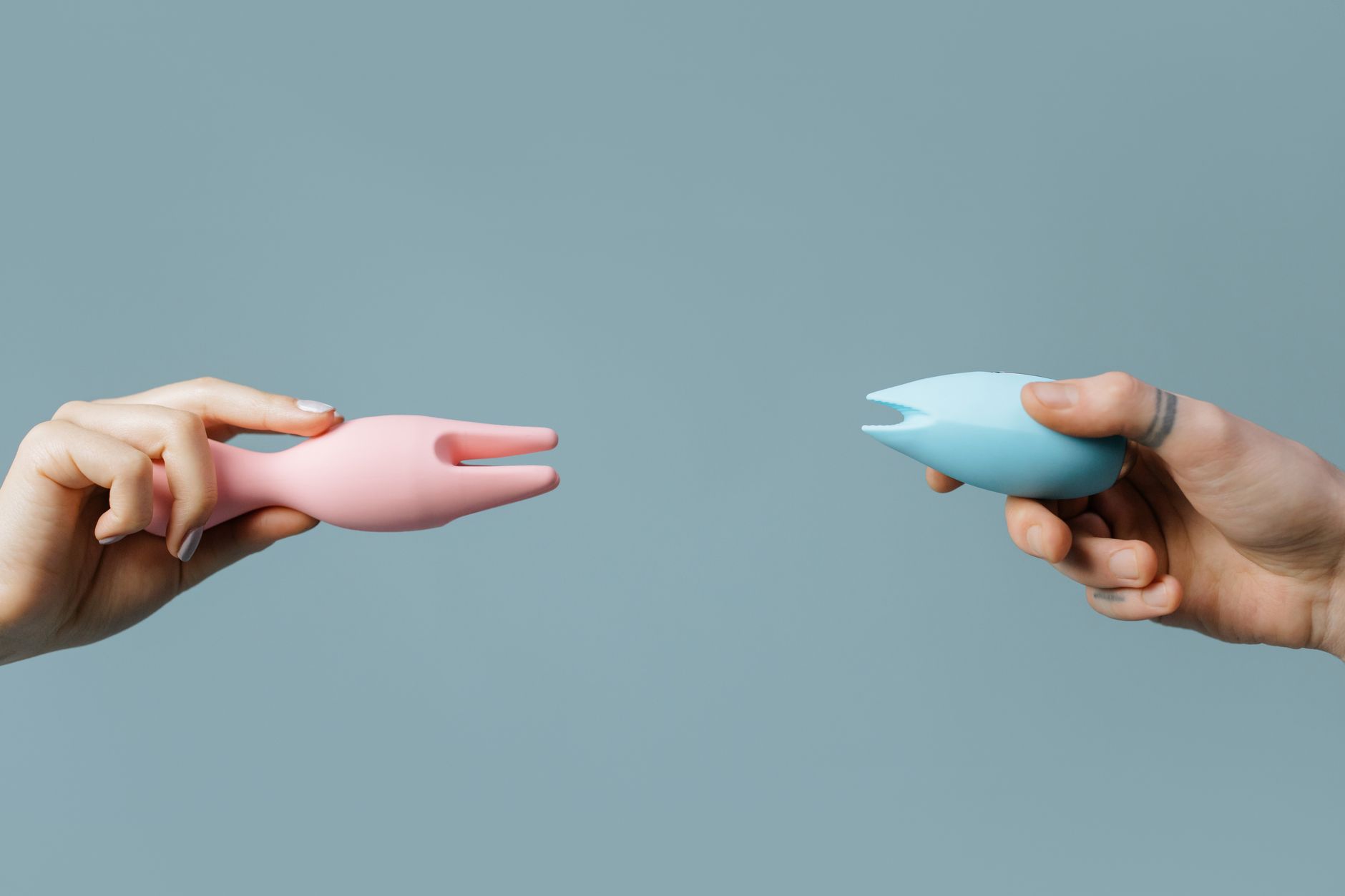
How to Use a Lemon Vibrator When Medications Numb Your Sensation
Let's be real. You started taking an antidepressant or antihistamine to solve one problem, and now you're dealing with another: sensation that's flattened, muted, like someone turned down the volume on your whole body. Orgasms feel distant. Arousal takes longer. Touch that used to feel electric now registers as... fine, but not great.
Here's what I tell my clients: medication numbness is not the same as lost desire. Your brain still wants pleasure. Your nervous system is just receiving the signal at lower volume. A lemon clitoral vibrator works in a completely different lane than fingers or a partner's touch, which is exactly why it can bypass that numbness and restore sensation when nothing else does.
I'm going to walk you through why this happens, how air-suction technology like the Lem actually rewires the equation, and the exact approach that helps you feel something again.
Why medications dull sensation in the first place
SSRIs (selective serotonin reuptake inhibitors) like sertraline and paroxetine are notorious for this. They're doing their job by stabilizing serotonin, but serotonin also regulates arousal and orgasmic response. Antihistamines, beta-blockers, and even some birth control formulations can have the same dampening effect.
What's happening neurologically is not complicated: your brain's ability to transmit the sensations of pleasure is operating at partial capacity. It's like the signal is being sent, but the volume is turned down. This is different from anhedonia, where you don't care about pleasure at all. You still want it. You're just not feeling it as intensely.
The good news is that this isn't permanent, and it's absolutely not a reason to accept numb sex for the next five years.
Why a lemon vibrator works differently than manual stimulation
This is the part most people miss. When you're on a medication that dulls sensation, standard vibration (the kind that relies on frequency alone) can feel like hammering at a dulled nerve. It doesn't land the same way it did before.
Air-suction technology, like what you get with a lemon clitoral vibrator, works on a completely different principle. Instead of direct vibration, suction creates a gentle seal and rhythmic pulse that stimulates the thousands of nerve endings in your clitoris without the same mechanical pressure. It's less like knocking and more like breathing.
For bodies with medication-dulled sensation, this matters because suction engages deeper nerve networks that standard vibration sometimes misses. It also creates a sensation that's novel to your nervous system. If your brain has been tuned out to a particular type of stimulation, a different sensory pathway can actually slip through that numbness.
How to adapt your technique when sensation is muted
Using a lemon clitoral vibrator when you're on medication that numbs sensation requires a slightly different playbook than standard use.
Start with higher intensity patterns earlier. When sensation is dulled, you'll need more signal to feel anything at all. This doesn't mean you're broken. It means you skip patterns 1 and 2 and go straight to 3 or 4. Your tissue is fine. Your nerve sensitivity is just lower right now.
Extend your warm-up period. Medication numbness often comes with slower arousal too. Budget 20 to 30 minutes for foreplay, whether that's solo or with a partner. Your body needs time to build up to the sensitivity threshold where the lemon vibrator registers as intense enough.
Experiment with positioning. Sometimes a slight angle change makes the difference. Direct contact on the clitoral glans might feel like nothing, but positioning the suction head slightly to the side, where nerve density is actually higher, can make it click. Try a few millimeters of movement.
Layer sensations. Use a lemon vibrator on your vulva while stimulating your breasts, your inner thighs, or your nipples with your other hand or a partner's hands. When sensation is muted everywhere, combining stimulation pathways can create enough total signal for your brain to notice it.
The rhythm of rebuilding sensation over time
Here's what matters most: consistent use actually rewires your nervous system's responsiveness over weeks, not days. This isn't about forcing an orgasm. It's about training your body to recognize pleasure signals again.
Use your lemon vibrator two or three times a week, even if you don't orgasm. Your goal is sensation, not performance. After about four weeks of consistent use, most people report noticeable shifts. The dulled feeling starts to lift. What felt like static becomes a signal again.
I've had clients tell me their sensation improved so much they could actually feel a difference by week three. Others needed six or seven weeks. Medication-related numbness is real, but it's also temporary and trainable.
When to talk to your doctor about adjustments
If numbness is severe enough that a lemon clitoral vibrator doesn't help after consistent use, your medication dose or type might be the issue. This is worth discussing with whoever prescribed it. Sometimes a small dose reduction, a timing adjustment (taking it at night instead of morning), or switching to a different class of SSRI can make all the difference.
Some antidepressants are worse for sexual sensation than others. Bupropion, for instance, is actually known for preserving sexual function. Sertraline and paroxetine are the worst offenders. If you're on one of those and you've tried everything, your prescriber might have alternatives worth exploring.
You don't have to choose between mental health and sexual pleasure. Those conversations are worth having.
Rebuilding confidence alongside sensation
One thing I see constantly: medication numbness doesn't just dull sensation. It also damages confidence. You start to feel broken. You stop wanting to try. Your partner might start feeling rejected or confused about what's happening.
The psychological piece matters as much as the physical one. Using a lemon vibrator isn't just about rebuilding nerve sensitivity. It's about saying to yourself: I still deserve to feel good. My pleasure still matters. This numbness is temporary and fixable.
If you have a partner, letting them in on what's actually happening helps too. "My medication makes sensation harder, but I want to rebuild it" is a completely different conversation than silence and avoidance. When partner pressure affects your orgasm, clarity about what's really going on removes so much shame.
The patience part
Medication-induced numbness is not your fault. It's a known side effect of drugs that are keeping you mentally stable. Being angry at your body is understandable but gets you nowhere. Being systematic about rebuilding sensation does.
A lemon clitoral vibrator, used consistently and with realistic expectations, actually works. Not because it's magic. Because it's engineered to reach nerve pathways that standard vibration misses, and because your nervous system is plastic. It adapts. It learns. It rebounds.
Give yourself four weeks of consistent use. Track what you notice. Adjust your technique based on what works. And if nothing's shifting, talk to your doctor about whether a medication adjustment is worth exploring. You're not stuck here.
People Also Ask
Can you use a lemon vibrator safely if you're on multiple medications that numb sensation?
Yes. The Lem vibrator itself is safe regardless of your medication list. What matters is the signal your nervous system is receiving. If you're on several medications known to dull sensation, your threshold for feeling anything will just be higher. You'll use higher intensity patterns and need longer warm-up time. There's no safety risk. Start with pattern 3 instead of pattern 1, give yourself 25 minutes of foreplay, and adjust from there. If you have concerns about specific medication interactions, check with your prescriber, but there are no contraindications between personal wellness devices and standard psychiatric or antihistamine medications.
Does sensation numbness from medication ever fully go away?
Most of the time, yes. Your nervous system is adaptive. Once you either change medications, adjust your dose, or give your body enough time on the same medication, sensation typically normalizes. For some people it takes weeks, for others it takes months. Consistent stimulation with a device like the Lem actually speeds up that recovery because you're actively training your nervous system to recognize and respond to pleasure signals. It's not passive waiting. It's active rebuilding.
Is it better to use a lemon vibrator alone or with a partner when you have medication numbness?
Both have benefits. Solo use lets you experiment without performance pressure and figure out exactly what intensity and positioning works for your numbed sensitivity. Partner use, once you've figured out your own path, adds psychological intimacy and can help rebuild connection after the isolation of medication-induced flatness. Start solo to map what works. Then bring your partner in once you have a clearer sense of your own responsiveness. That way they're not guessing, and you're not performing.
How long does it take to feel a difference with consistent lemon vibrator use?
Most people notice a shift within three to four weeks of two or three uses per week. This doesn't mean a dramatic orgasm by week four. It means the signal starts to register again. What felt like static becomes something you can actually feel. By week six or seven, most people report meaningful improvement in arousal speed and sensation intensity. Medication numbness is stubborn, but it's not permanent. Consistency matters more than frequency.
What if a lemon clitoral vibrator still doesn't help after consistent use?
Then the issue is likely your medication itself rather than your body's capacity for sensation. At that point, a conversation with your prescriber is worth having. You might need a dose adjustment, a timing change, or a switch to a different medication entirely. Some antidepressants preserve sexual function better than others. You don't have to accept permanent numbness. It's a solvable problem, but sometimes the solution is medical rather than device-based.
Can you use lube with a lemon sucker if you're on medication that dulls sensation?
Absolutely. Water-based lubricant is always safe with the Lem. In fact, if medication has also caused any dryness (which often happens alongside numbness), adding lube actually improves sensation by reducing any friction discomfort. The suction seal works just as well with lube as without. Use it liberally.
What happens next
Medication numbness is real, but it's not permanent. Your nervous system is plastic. It learns. It adapts. A lemon clitoral vibrator works with that plasticity instead of against it, using a sensory pathway (suction) that often slips through the numbness that standard vibration can't reach.
Start with two uses per week. Use intensity patterns 3 or higher. Give yourself 20 to 30 minutes of warm-up time. Track what you notice. After four weeks, most people feel a meaningful shift.
If you're struggling with this on top of managing your mental health, that's heavy. Using a lemon vibrator to manage stress and anxiety can actually help with both the numbness and the weight of it all. You're not broken. Your medication is working. Your pleasure is just recalibrating. That's fixable.
Have questions about how to approach this or whether adjusting your medication is right for you? Reach out to our team. We can point you toward resources and answer specific questions about the Lem.