
The gap between touch and feeling
Here's the thing about body dysphoria: it's not that you don't have sensation. It's that the signals between your skin and your brain have a dead zone. You can feel the pressure, but it doesn't feel like it's happening to you. You're watching from somewhere above, or behind, or outside the room entirely.
For many people, this gap widens during pleasure. The moment things get intimate, the dissociation kicks in harder. That's not broken. That's not uncommon. And contrary to what most sex advice says, the solution isn't to "just relax" or "be present." The solution is something smaller, slower, and surprisingly effective: grounding through sensation itself.
Why lemon vibrators work differently for dysphoria
Most vibrators create broad, diffuse sensation. A lemon clitoral vibrator works differently. The suction mechanism creates a precise, rhythmic pull that your nervous system registers more clearly than standard vibration. That specificity matters when your brain is trying to ignore your body.
The suction feels less abstract than vibration. It's localized. It has a pattern. Instead of your nervous system saying "something is happening to your genitals," it's forced to say "the Lem is pulling here, now, in this rhythm." The difference between those two statements is enormous when you're trying to come back into your body.
I'm not saying using a lemon vibrator cures dysphoria. It doesn't. What it does is create a structure that makes grounding easier. Think of it as scaffolding for attention, not a replacement for the work.
The grounding foundation before you even touch anything
Before you use any clitoral vibrator, dysphoria or not, you need to establish what therapists call sensate focus. It's a technique from sex therapy, but it works for embodiment too.
Here's the practice: pick one small area of your body that feels "safer" to inhabit. That might be your forearm, your collarbone, your neck, your hands. Not your genitals yet. Somewhere neutral that won't trigger as much dysphoria.
Spend five minutes a day touching that area without purpose. No lotion. No context. Not for pleasure, not for anything. Just hand on skin. Your job is to notice: Is it warm? Cold? Textured? Does it feel the same as yesterday? When your mind drifts away, you just bring it back. Five minutes.
Do this for a week before you go near a lemon vibrator. This teaches your nervous system that you can be present in your body without it being a threat. Once you can do five minutes without dissociating, you're ready for the next piece.
Introducing the lemon vibrator without pressure
When you do start, don't turn it on.
I mean that literally. Hold the Lem. Feel its weight. Feel the texture of the silicone. Let your nervous system learn what it is before it does anything. This is the same grounding principle, scaled up slightly.
Turn it on tomorrow. Or the day after. When you do turn it on, use it on that safer area first. Your forearm. Your inner wrist. Your neck. Let your body learn what the suction feels like in lower-stakes territory. One pattern, 30 seconds, then stop.
Your dysphoria is going to tell you this is silly. That you're wasting time. That you should just "get on with it." Your dysphoria is lying. The point is not efficiency. The point is creating enough safety that your nervous system doesn't bail out the moment something feels intense.
Building the map back into your genitals
Once you've used the Lem on neutral zones, you can start moving closer. Outer thigh. Inside of your thigh. The fold where thigh meets pelvis. Each one for a few sessions before moving inward.
When you finally get to your vulva, start with the Lem turned off. Just hold it there. Get used to the idea that it's there without it doing anything. Your brain needs permission to believe this is safe before sensation hits.
Then pattern 1. Just five seconds. That's all. Five seconds and stop. Check in. Can you feel it happening to you, not just happening near you? If no, that's fine. Do it again tomorrow. Five seconds again.
The temptation is to turn up intensity or add more time. Don't. The whole point is that you're training your nervous system to stay present through small stimulus, not reaching for orgasm. Orgasm will come later, if it comes. Right now you're building bandwidth.
The patterns that work best for embodiment
Most of the lemon vibrator patterns fall into two categories: rhythmic pulses and steady waves. For dysphoria work, I recommend the rhythmic patterns.
Rhythmic patterns feel like something is happening to you in real time. Your brain can't zone out as easily because the rhythm keeps pulling you back. It's like a conversation your body is having with itself.
Stay with patterns 1 through 3 for the first few weeks. Higher patterns can feel overwhelming if you're still building the bridge between sensation and presence. Once you can do 10 minutes on pattern 3 without dissociating, you can explore higher numbers.
When your brain fights back
Disassociation during pleasure is a protective response. Your nervous system learned, at some point, that being present in your body during sensation wasn't safe. So now it evacuates. That's not a character flaw. That's your system doing exactly what it was trained to do.
If you find yourself floating away mid-session, pause. Don't push through. Get up. Walk around. Touch something cold. Name five things you can see. These are grounding techniques, not distractions.
Then try again tomorrow. Five seconds on pattern 1 on your thigh. You're not failing. You're teaching your nervous system that it can have sensation and stay here at the same time.
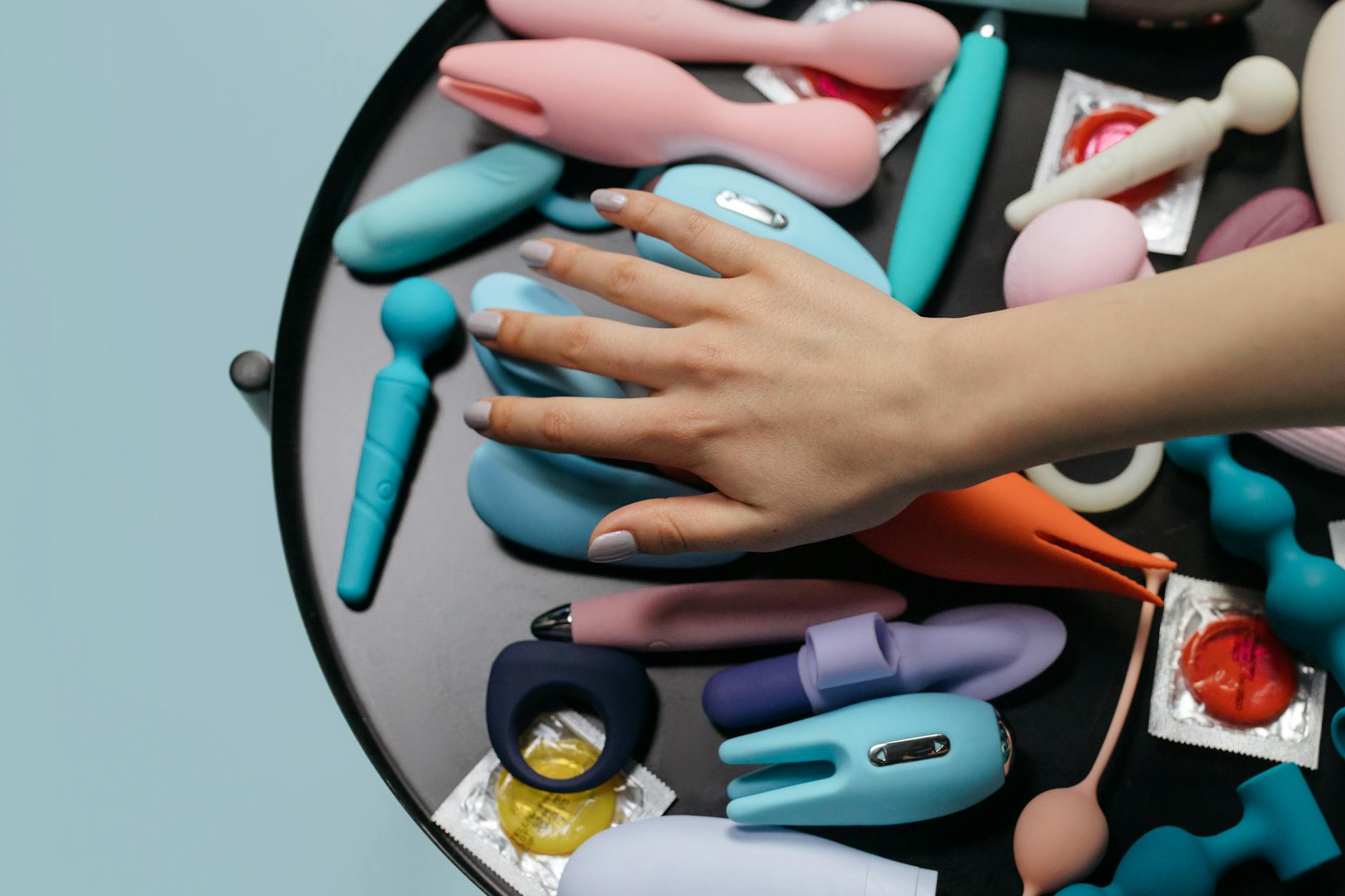
Photo by cottonbro studio on Pexels
The role of lubrication and comfort
Water-based lube isn't just about sensation. It's a grounding anchor. Before you use your lemon vibrator, apply lube slowly. Notice the temperature. Notice the smell. Notice how your vulva responds to touch before the Lem is even involved.
This is another chance to check in with your body. "You're here. You're safe. Here's what's coming next." Lube becomes part of the narrative you're building with yourself.
Use a generous amount. Discomfort will pull you out of your body even faster than dysphoria will. You're not trying to be efficient. You're trying to create the conditions where staying present is possible.
What happens when dysphoria and lemon vibrators actually click
Some people report a shift after weeks of this work. Not a cure, but a crack in the wall. A moment where they felt the Lem pulling and thought "that's me" instead of "that's happening to my body." That moment is the goal.
It might last five seconds. It might happen once. But it proves that the bridge is possible. And once you know it's possible, you can build it wider.
Many of my clients who've worked through dysphoria with this approach eventually find that the lemon suction mechanism helps them stay grounded during partnered sex too. The specific sensation pulls their nervous system back into present time when it tries to float away. That's not magic. That's just neurology finding a reliable anchor.
When to bring in professional support
If you're using a lemon vibrator and your dysphoria is getting worse, not better, that's real feedback. You might need a trauma-informed sex therapist or a somatic practitioner alongside this work. Some dysphoria is too big to rewire alone with sensation play.
That's not a failure. That's you being smart about your nervous system. A therapist trained in somatic work can help you understand what your body is protecting you from and whether pleasure work is actually the right next step right now.
FAQ
Can you use a lemon clitoral vibrator if you dissociate during sex?
Yes, but not at first. Start with sensate focus on non-sexual areas, then introduce the Lem on low patterns on neutral body zones. The rhythmic nature of lemon vibrators can actually help with embodiment because the pattern gives your brain something to track. The key is patience and pacing, not jumping straight to genital use.
How long does it take to feel less dysphoric during pleasure?
It depends on the person and the severity of the dysphoria. Some people notice shifts in two to three weeks of consistent sensate focus. Others need two to three months. There's no standard timeline. Progress is measured in seconds of presence, not in reaching orgasm. If you're asking "can I stay in my body for 30 seconds," that's a bigger win than a full session of dissociation.
Is it normal to feel nothing when using a lemon vibrator with dysphoria?
Completely. Dysphoria numbs you. You might feel the physical sensation of the suction but not connect it to yourself. That's why the slow introduction matters. Your nervous system needs evidence that it's safe to feel before it will let you feel. That evidence builds over time, not in one session.
Should I use a lemon vibrator alone or with a partner when I have body dysphoria?
Alone, at first. You need privacy to notice what you're noticing without performing for someone else. Once you've built 10 to 15 minutes of presence alone with the Lem, you can introduce a partner, but slowly and with clear communication about what you need. Some people find that partnered use triggers more dysphoria. That's useful information.
What if I can't get to a lemon vibrator without dysphoria spiking?
Start even smaller. Use your hand on neutral body zones first. The Lem can wait. Some nervous systems need three months of sensate focus before they're ready for a device. You're not behind. You're listening to what your body actually needs, which is the opposite of dysphoria.
Can you combine a lemon vibrator with grounding techniques?
Absolutely. You can use the Lem on pattern 1 while naming things you can see or feel. That double-anchoring helps your nervous system stay present. "The Lem is pulling in rhythm, the chair is supporting me, I can see the ceiling." It sounds awkward, but it's just your brain creating enough handles to stay tethered to the present moment.
The long game
Reconnecting with your body through dysphoria isn't a quick fix. It's a practice of showing up, paying attention, and believing that the gap between sensation and self can narrow. A lemon vibrator is just a tool. The real work is the permission you're giving yourself to inhabit your own skin, slowly and without judgment.
If you have questions about how to adapt this approach to your specific situation, reach out. Hello Nancy's customer support can connect you with resources, and I'm always available for consultation.