
The Body Remembers Everything
Long emotional distance doesn't just affect how you feel about your partner. It affects your nervous system. Your skin becomes less sensitive to their touch. Your arousal takes longer to ignite, if it ignites at all. Your body has learned to protect itself by going quiet.
This isn't dysfunction. It's a survival response. And it's completely reversible.
The couples I work with often describe this phase as "going through the motions." Sex happens, but it feels performative. There's no spontaneous reach for a hand. A kiss feels like obligation. The body is still there, but the circuits that connect emotion to sensation have temporarily shut down.
The good news: those circuits can be reignited. But not by pretending the distance didn't happen. And not by forcing intimacy before the groundwork is in place.
Why Physical Touch Stops Working After Emotional Disconnect
Here's the neuroscience part, made simple. When you feel emotionally unsafe or distant from your partner, your vagus nerve shifts into protection mode. Your skin becomes less responsive to light touch. Your arousal system deprioritizes. Touch that should feel pleasurable instead feels intrusive or hollow.
Meanwhile, your brain is running a quiet risk assessment: Is this safe? Do I trust this person? Your nervous system won't give you real pleasure until it gets a clear answer.
This is why trying to "just have sex" after months or years of emotional distance often backfires. Your body is telling you the truth your mind might not be ready to admit. Pushing through that resistance doesn't fix anything. It just adds frustration on top of distance.
Rebuilding Sensation: Why This Takes Time
Physical intimacy after emotional distance isn't about frequency. It's about recalibration.
The couples who move through this most successfully tend to do three things:
First, they separate emotional repair from physical reconnection. You don't solve emotional issues through sex. And you don't rebuild trust through forcing physical contact. These are two parallel projects that support each other but aren't the same.
Second, they start with sensation that feels safe. This might mean solo touch before partnered touch. This might mean using a lemon clitoral vibrator to relearn what pleasure feels like in your own body, without the complication of someone else's needs in the room.
Third, they rebuild the nervous system's trust in stages. Light touch first. Presence before intensity. Consistency before spontaneity.
Starting Solo: Relearning Your Own Body
One of the most effective interventions I recommend is a period of solo pleasure, using tools like a clitoral vibrator or the suction sensation of a Lem vibrator, without the expectation of partnered sex.
Why this works: Your body needs permission to feel good again without performing. Without monitoring a partner's reaction. Without that background hum of "Am I doing this right?" or "Is he enjoying this?"
A lemon vibrator or similar suction device serves a specific function here. It provides consistent, controllable stimulation that your nervous system can predict. Unlike a partner's touch, which carries emotional baggage right now, a vibrator is neutral. Your body can gradually learn: pleasure is possible. Sensation is available. I am safe.
Start with low intensity. Give yourself 15 to 20 minutes without goal. The goal here is not orgasm. It's sensation. It's noticing where you feel the stimulation. Where your body tightens. Where it softens. What rhythm makes your breath change.
This solo phase typically lasts 2-4 weeks. Some people need longer. There's no schedule.
Partnered Reconnection: Touch Without Pressure
Once you've spent time relearning solo pleasure, you're ready to invite your partner back in. But not into sex. Into sensation.
This is called a sensate focus exercise, and it's one of the most powerful tools in couples therapy. Here's how it works:
You and your partner set aside 20-30 minutes. You remove the expectation of sex entirely. Agree beforehand that sex is off the table. This removes the pressure.
One person is the receiver. The other is the giver. The giver explores the receiver's body with hands, slowly, with curiosity. Not trying to arouse. Just noticing texture, temperature, how skin responds to different kinds of touch.
The receiver focuses on sensation. Where does it feel good? Where does it feel neutral? What makes you want to move closer? What makes you want to pull away? You communicate this as it happens.
After 20-30 minutes, you swap roles.
The point isn't arousal. The point is presence. It's retraining your body to trust that touch can be safe, slow, and not demanding.
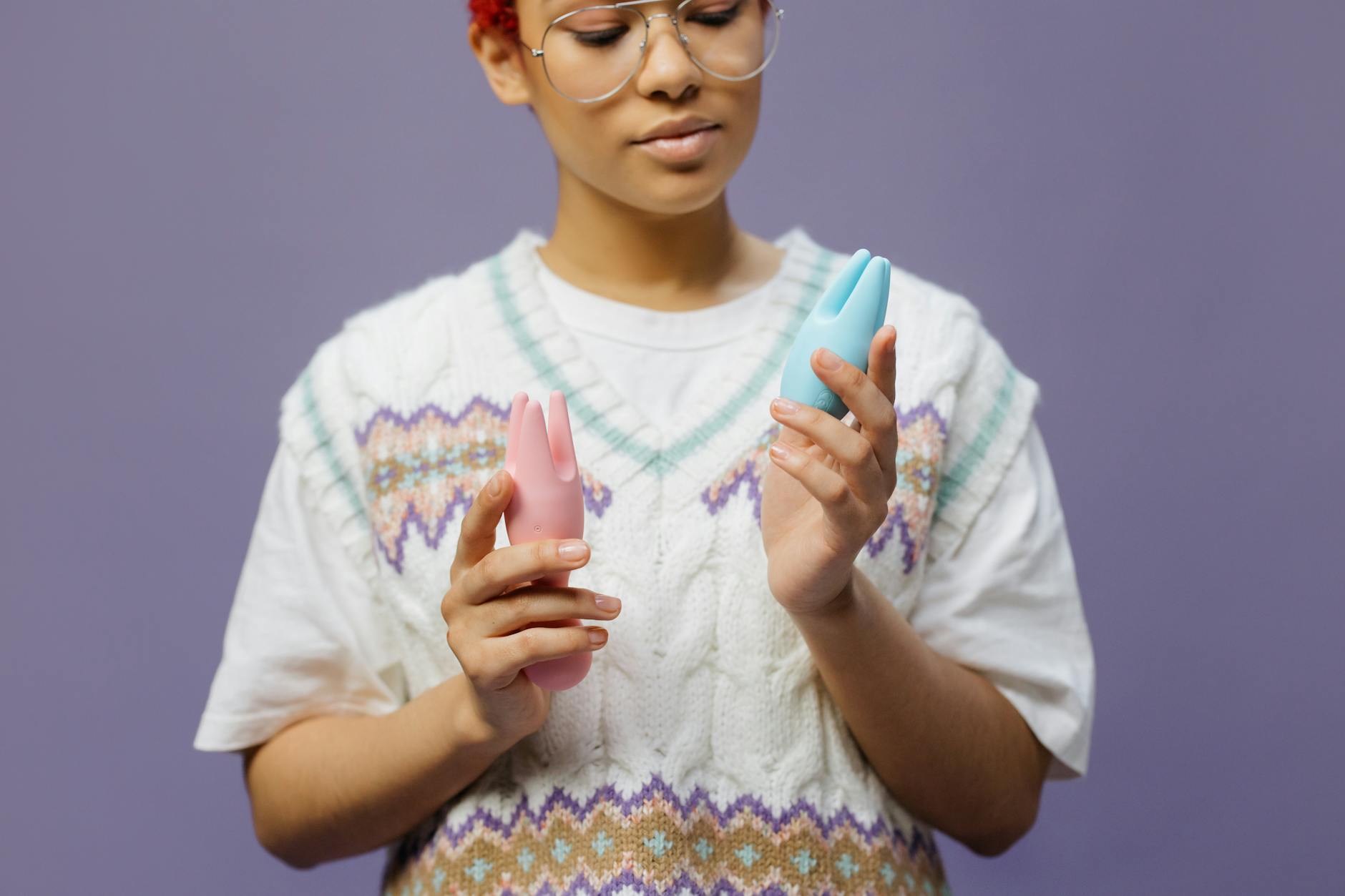
Photo by cottonbro studio on Pexels
When to Introduce Toys Into Partnered Reconnection
This is where I often see couples get stuck. They think: "If we bring a vibrator into this, something is wrong. It means I'm not enough."
Actually, the reverse is true. A lemon clitoral vibrator or similar adult toy is a bridge during reconnection. It serves as a neutral stimulus that neither partner has baggage around. It's not replacement. It's reset.
Here's how to introduce it:
Have the conversation outside the bedroom first. "I want to try something during our time together. I've been using a vibrator solo and it's helping me feel sensation again. Would you be open to me using it while we're touching?"
That's it. No justification needed. No performance.
Many partners find that watching their partner use a vibrator during sensate focus is actually re-igniting their own desire. Because they're witnessing pleasure without pressure. They're not responsible for creating it. They're just present for it.
The vibrator becomes a tool of reconnection, not replacement.
The Conversation That Actually Matters
None of this works without talking about the emotional piece. And I don't mean a one-time, "We need to fix our intimacy" conversation. I mean ongoing, curious questions.
Instead of: "Why don't you want to have sex anymore?"
Try: "When did you notice the shift? What was happening for you?"
Instead of: "I feel like you don't find me attractive."
Try: "I'm noticing I've been hesitant about touch. That's about me right now, not about you. Can we talk about what I'm feeling?"
These conversations do two things. They gather information. And they signal that you're not demanding, you're curious. That distinction matters to your nervous system.
Common Roadblocks and How to Move Through Them
Sometimes one partner is ready to rebuild before the other. This is normal and not a crisis.
If your partner initiates touch and you're not ready, say so. "I need more time. This isn't about you." If you're ready and they're not, don't push. Use this time for solo pleasure practice instead.
Sometimes guilt shows up: "We've been distant for so long, maybe I don't deserve pleasure right now." This is your nervous system lying to you. Pleasure isn't a reward for good behavior. It's a signal that you're learning to trust your body again. You do deserve that.
Sometimes resentment resurfaces during touch: "Why does it feel so easy for them, but so hard for me?" Because you're processing different things. Let that be okay. Keep going.
What You're Actually Rebuilding
This isn't about returning to how things were before the distance. You can't. And you wouldn't want to, because whatever conditions led to that distance would still be there.
What you're doing is building something more intentional. A nervous system that trusts again. A body that's learned it's safe to feel. A partnership where touch carries meaning, not obligation.
The timeline varies. Some couples move through this in 2-3 months. Others take longer. A year of consistent, conscious reconnection isn't unusual.
But every week of showing up, of using tools like a lemon clitoral vibrator to stay connected to your own pleasure, of having conversations that matter. That's rebuilding. That's real.
Frequently Asked Questions
How long does it take to rebuild physical intimacy after emotional distance?
There's no fixed timeline, but most couples see meaningful shifts in 6-12 weeks of consistent practice. The sensate focus exercises work best when done weekly. Some people report reconnection happening much faster once they prioritize it. Others need 3-6 months. The key is showing up regularly, not the speed of the timeline.
Can using a vibrator alone damage a relationship?
No. In fact, solo vibrator use during the reconnection phase typically strengthens relationships. When you rebuild your own capacity for pleasure, you show your partner: I'm not waiting for you to fix me. I'm doing the work. That creates respect, not distance. Most partners find it attractive.
What if my partner refuses sensate focus exercises?
That's information. Not a character flaw, but real data about where they are in the process. Sometimes one partner needs individual therapy first to understand what the distance was about. Sometimes they're not ready to rebuild yet. Have a conversation: "What would make you feel safe trying this?" If they remain unwilling after several conversations, couples therapy often helps shift the dynamic.
Is it normal to feel numb during touch when we first start reconnecting?
Completely normal. That numbness is protection, not failure. Keep going. Use a lem vibrator or clitoral vibrator to help your nervous system remember what sensation feels like. Gradually, with consistency and safety, the numbness shifts. Pushing through it doesn't help. Continuing gently does.
Should we try to have sex while rebuilding, or wait until we feel connected again?
Wait. Sex during the reconnection phase typically creates more distance because it reintroduces pressure and performance. Stick with sensate focus and solo pleasure for at least 4-6 weeks before attempting sex. When you do return to sex, it will feel different because your nervous systems have reset.
What if one partner wants more frequent touch and the other doesn't?
This is actually a conversation problem hiding as a sex problem. Ask: What does touch mean to you right now? Is it safety? Is it desire? Is it reassurance? Often these are different for each person, and the mismatch creates the frustration. Once you know what each person needs, you can find solutions that don't require one person to push through numbness or the other to feel pressured.
The Path Forward
Rebuild isn't a sprint. It's a recalibration of two nervous systems learning to trust each other again.
Start with yourself. Use a lemon vibrator or similar tool to reconnect with your own pleasure. Then invite your partner into presence without pressure. Have conversations that matter. Move slowly.
The couples who make it through this phase emerge with stronger foundations because they've chosen to rebuild intentionally, not just fall back into habit. That choice matters.
If you're stuck or need support, that's what professionals are here for. Reach out to a relationship therapist who understands nervous system work and somatic therapy. You don't have to figure this out alone.
For more on reconnection strategies, read our guide on rebuilding pleasure after relationship breaks your intimacy and trust, or explore how lemon vibrators help rebuild intimacy after hormonal birth control changes to understand other common barriers to physical connection.
Your body wants to feel again. Give it permission, time, and the right tools. The rest follows.