Let's name what's actually happening
When sex hurts after trauma, it's not that your body is broken. Your nervous system is working exactly as it's supposed to. It learned that intimacy equals danger, and now it's slamming the brakes every time something feels remotely similar to what happened. That's hypervigilance. That's survival.
The catch is that healing doesn't happen through force or willpower. It happens through slow, repeated proof that your body is safe again.
Why pain shows up after betrayal
Trauma doesn't live in your brain alone. It lives in your nervous system, your pelvic floor, your vaginal tissue. When you experienced betrayal or assault during sex, your body formed a neural pathway that links arousal with danger. Now your pelvic floor clenches reflexively. Your vaginal muscles tighten. Blood flow gets restricted. Touch that should feel good feels threatening instead.
This is called vaginismus or dyspareunia, depending on whether it's involuntary clenching or pain during penetration. Both are common post-trauma responses. Both are treatable. But they don't heal through partner sex alone.
They heal through solo practice with your own body, at your own pace, in an environment where you have complete control.
Why solo pleasure matters differently after trauma
Here's what's crucial: when you're with a partner, even a loving one, part of your brain is always monitoring their response. Are they frustrated? Are they judging? Are they going to push for more than I want? That divided attention keeps you in a low-level threat state.
When you're alone with a clitoral vibrator like the Lem, none of that applies. You can stop instantly. You can go slower. You can restart tomorrow if today feels like too much. There's no one to disappoint, no one to perform for, no one to protect yourself against.
That's not a substitute for partnered healing. That's the foundation that makes partnered healing possible.
How the Lem works specifically for trauma recovery
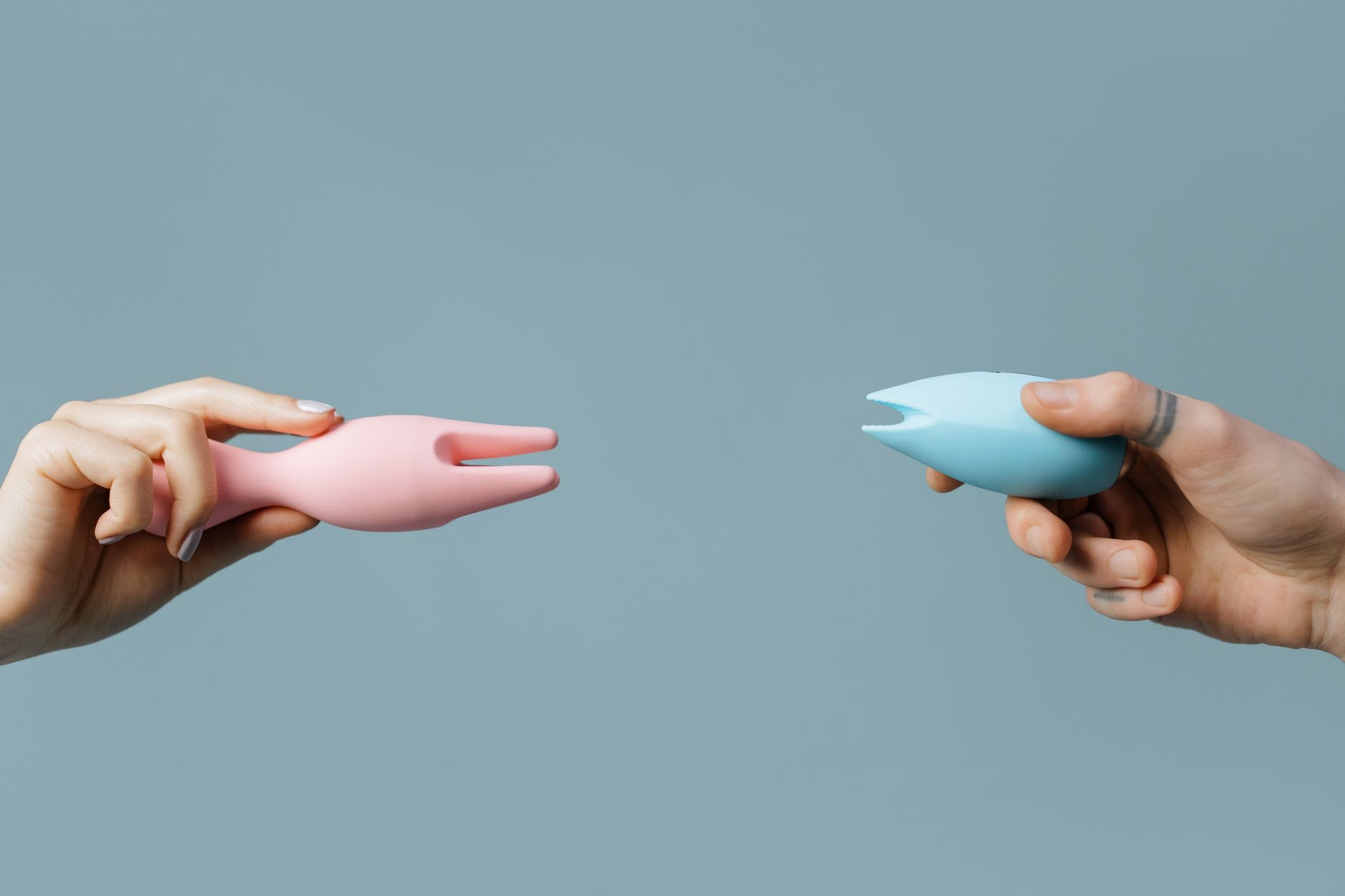
The Lem is an air-suction vibrator, which means it stimulates nerves through gentle suction rather than direct vibration or friction. For someone rebuilding trust with their own body, this matters.
Direct pressure can feel invasive if your nervous system is still in protection mode. Suction feels contained, external, easier to control. You can start at the lowest setting and add intensity only when your body is ready. Most clitoral vibrators force you to choose between "off" and "too much." The Lem gives you a gradient.
Also, because it's quiet and discreet, there's no additional sensory overwhelm. Some trauma survivors find loud buzzing triggering. The Lem's gentle operation means less background stress while you're relearning pleasure.
The practical sequence for rebuilding sensation
Start with non-sexual touch. Lie down in a safe space. Run your hands over your own body like you're getting to know it for the first time. Notice what feels neutral, what feels good, what makes you tense up. This is information. No goal. No orgasm. Just data.
Once you've mapped out what your body will tolerate, introduce the Lem on its lowest setting. Don't go directly to the clitoris. Start on the outer labia, the mons pubis, the inner thighs. Spend weeks here if you need to. Your nervous system isn't in a hurry.
When you're ready to move toward the clitoris, use it as a warm-up tool, not the main event. Five minutes on the lowest setting before touching yourself by hand. Then build from there.
If you feel clenching, numbness, or panic at any point, stop. This isn't failure. This is your nervous system asking for more time. Respect that.
Managing the mental side while your body heals
Your body is smart, but your mind has opinions too. Trauma survivors often experience intrusive thoughts during arousal: flashbacks, self-doubt, the voice of the person who hurt them. These thoughts don't mean you're doing it wrong. They mean your brain is still processing.
Honestly though, they often fade with repetition. The more times you experience pleasure without threat, the more your nervous system updates its threat assessment. But you have to let yourself feel the discomfort while that's happening.
Some tools that help: breathing. When you notice yourself tensing, shift your focus to a slow inhale through your nose, exhale through your mouth. Your vagal nerve responds to breathing patterns. Slow breathing tells your body, "We're safe now."
Also, don't expect orgasm early on. When desire feels disconnected from physical sensation, the goal shifts. You're not trying to achieve anything. You're trying to practice safety.
When to add a partner back into the picture
There's no timeline. Some people need months of solo healing. Some need years. But the marker is consistency: you can experience solo pleasure without panic or pain for multiple sessions. Your pelvic floor stays relatively relaxed. Your breathing stays calm.
When you're ready to introduce partnered touch, start small. Hand-holding. Kissing. Your partner touching you while you use the Lem. Notice how your body responds. If you feel safe, build slightly. If you don't, pause.
This isn't about rushing back to penetration. This is about rebuilding the neural pathway between intimacy and safety, one small moment at a time. If your partner is pushing you faster than feels right, that's a problem. Emotional intimacy is actually the foundation, and your partner needs to understand that.
What trauma-informed pleasure actually means
It means no pressure. No timeline. No performance expectation. It means your pleasure is the point, not a side effect. It means stopping when something doesn't feel right, without explanation. It means believing your body's signals over anyone else's agenda.
A clitoral vibrator like the Lem is a tool for that. It's not a magic fix. But it does give you back agency. You control the speed, the duration, the pressure. You're not at the mercy of someone else's body or someone else's needs. That restoration of control is often the first step toward genuine healing.
Your nervous system learned to protect you. Now it needs to learn that you're safe again. Solo pleasure is how you teach it.
FAQs
Is it normal to feel nothing when using a clitoral vibrator after trauma?
Completely normal. Trauma can numb sensation as a protective mechanism. Your body is literally shutting down feeling to keep you from experiencing the pain. This numbness often takes weeks or months to shift. Keep using the vibrator consistently, but without forcing sensation. Sensation usually returns when your nervous system feels safe enough to let it back in. If numbness persists beyond several months, check in with a trauma-informed therapist or pelvic physical therapist.
Can using a vibrator alone actually help with vaginismus after betrayal?
Yes, but it's one part of a larger healing process. The vibrator helps desensitize your pelvic floor and rebuild positive neural associations with arousal. But vaginismus usually also needs pelvic floor physical therapy and often therapy for the underlying trauma. A lemon clitoral vibrator like the Lem is a tool, not a complete solution. Combine it with professional support for best results.
What if I panic or have a flashback while using a vibrator solo?
Stop immediately. Turn it off, set it aside, slow your breathing. Remind yourself where you are and that you're safe now. This happens to many trauma survivors. It doesn't mean vibrators are wrong for you. It means your nervous system needs more time before that specific trigger. Try again a week later, or focus on non-sexual touch for longer. Your pace is the only pace that matters.
Should my partner know I'm using a vibrator to heal from the trauma they caused?
That depends on whether they're willing to be part of the healing process or part of the problem. If your partner is defensive, dismissive, or blames you for the trauma, that's information about your relationship. If they're genuinely remorseful and open to understanding your needs, transparency often helps. But your healing doesn't require their permission or their comfort. You get to do this for you.
How long does it usually take to rebuild pleasure after relationship trauma?
It varies wildly. Some people see shifts in weeks. Others take a year or more. The timeline depends on the severity of the trauma, your support system, whether you're in therapy, and your nervous system's baseline sensitivity. Don't compare your timeline to anyone else's. Your body heals at its own pace. Consistency matters more than speed.
Can a lem vibrator help if I'm not sure if what happened to me counts as trauma?
Yes. You don't need an official diagnosis to use tools that help you reclaim your body. If sex is painful or feels scary, that's enough reason to explore solo pleasure at your own pace. A clitoral vibrator is a low-pressure way to do that. And if, as you heal, you realize that what happened was traumatic, you've already started the process of rebuilding safety.
Your pleasure is your own again
Healing from relationship trauma doesn't mean going back to how things were before. It means building something better, something where your body's signals matter and your "no" is always respected. A lemon clitoral vibrator like the Lem is one tool for that reclamation. Start slowly. Breathe. Listen to what your body tells you. And give yourself the time you need. You're not broken. You're healing. That takes patience, but it works.