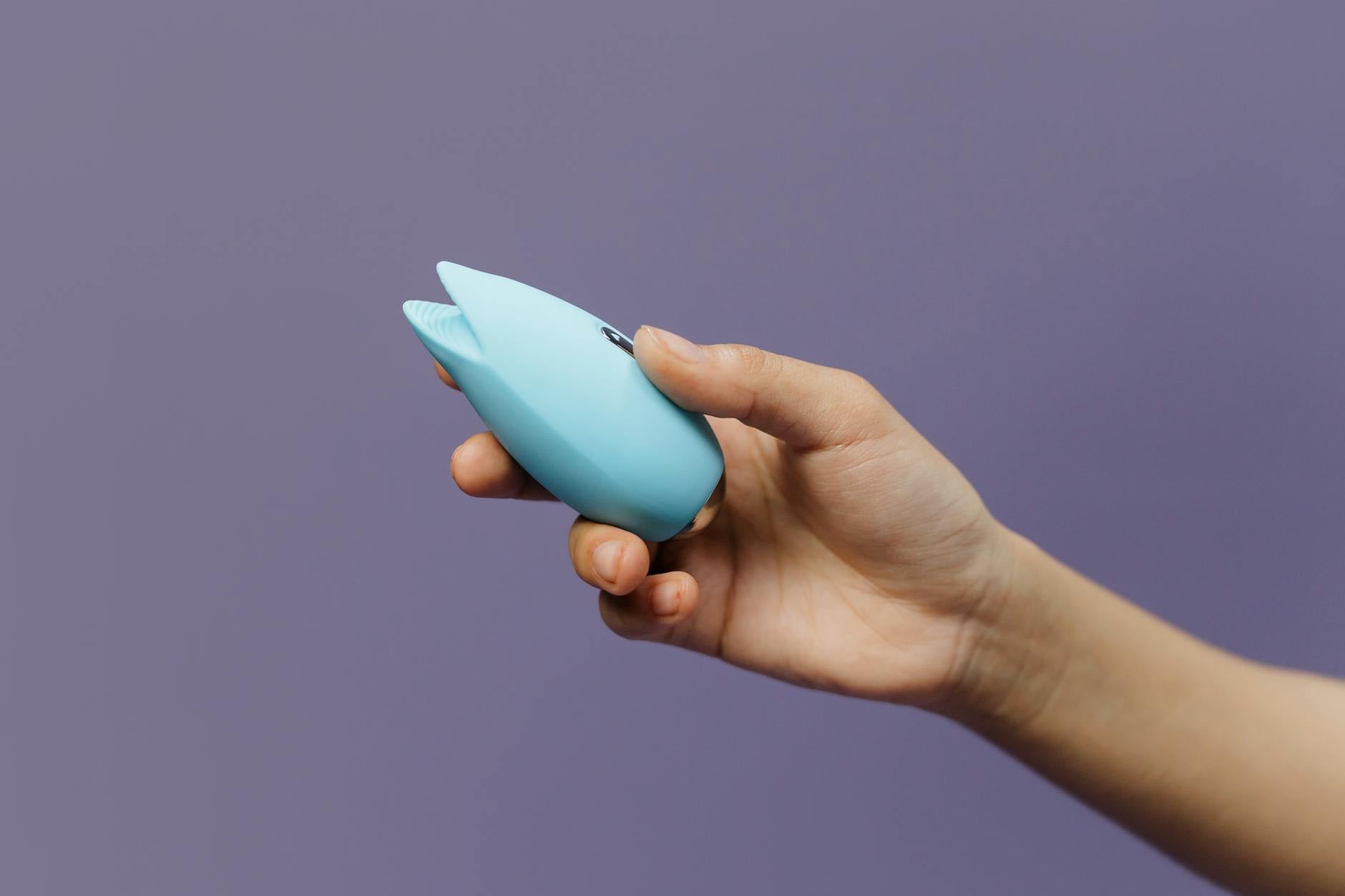
Let's be real about the overwhelm
Walking into the world of clitoral vibrators for the first time feels like stepping into a tech showroom. Suction or vibration? Loud or quiet? Eight settings or eighty? Budget-friendly or investment piece? The marketing noise alone is enough to make you close the tab and pretend you never looked.
Here's what I tell clients in my office: most of that complexity doesn't matter when you're starting. What matters is understanding three things about your body and your life, then matching them to a vibrator that actually fits.
Understanding sensation type: suction versus vibration
This is the single most important choice you'll make, and it's not a technology question. It's a sensation question.
Vibration moves side-to-side. Think of a phone on buzz mode. It stimulates the surface of the clitoris and surrounding tissue with rapid movement. Many people describe it as tingly, buzzy, or electric.
Suction works differently. It creates a gentle vacuum that draws the clitoral tissue slightly upward, then releases. The sensation is more like a mouth, which is why some people call suction toys "clit suckers." It feels fuller, less sharp, and often builds pleasure more gradually.
Here's the thing nobody tells you: neither is better. Your body has a preference, and you won't know it until you try. But you can make an educated guess.
If you've had a partner use their mouth on you and it felt incredible, suction toys like the Lem will probably resonate. If direct vibration against your clit felt good, a traditional vibrator might be your match. If you have no reference point, that's fine. Most people find suction slightly more forgiving for a first toy because it's gentler on sensitive tissue.
Intensity levels and why more isn't better
A vibrator with 15 settings sounds better than one with 3, right? Wrong.
When you're new to this, you need one thing: enough intensity to find what feels good. Everything else is noise. The Lem, for example, has a focused intensity range that most beginners find immediately useful. You don't need a vibrator that goes from "barely perceptible" to "shake the entire building." You need one that covers "that's nice" to "oh, that's really nice."
Too many settings do two things: they overwhelm you with choice paralysis, and they often mean the lowest settings are weaker than they need to be. Start with fewer options. Get to know them. Add complexity later if you want it.
Budget as a practical filter
I'm not going to tell you that expensive is always better. That's marketing. But I will tell you this: toys under $40 often cut corners on materials or motor quality. Toys under $30 almost always do.
The sweet spot for a first vibrator is $60 to $90. You get solid construction, a reliable motor, and a product that's been tested enough that you're not beta-testing someone's first prototype. The Lem sits right in this range and delivers on both sensation and durability.
Don't spend $150 on your first toy. You might hate how vibration feels on your body. You might discover you prefer suction. You might realize you want something quieter, smaller, or stronger. A mid-range toy lets you learn without a financial hit.
Size and how it actually matters
Bigger does not mean more intense. Smaller does not mean less discreet.
What size actually affects is how you hold it and where you can position it. A compact toy like the Lolly Mini is easier to grip and maneuver solo. A larger toy might feel more comfortable in your hand if you have bigger hands, or if you want to use it with a partner.
For a first toy, I recommend something you can hold steadily without your hand cramping. Your clitoris is sensitive, and shaky hands make it harder to find the right angle. You want a toy that feels like a natural extension of your hand, not a workout tool.
Test the size in your mind: Can you grip it without thinking about it? Does it feel like it will slip? Will your hand get tired holding it for 15 to 20 minutes? Those are the real questions.
Noise level is worth taking seriously
If you live alone and love loudness, skip this section. But if you share walls, a bed, or a space with other people, noise matters.
Vibrators range from barely-there whispers to small-motor jackhammers. A loud toy can derail your pleasure because you're listening for footsteps instead of focusing on sensation. Some people get anxious about noise and it kills arousal entirely.
Lem Vibrator designs its toys to be quiet enough that you don't have to broadcast your private time to everyone around you. That's not a small thing. Quiet gives you permission.
Material safety and why it's non-negotiable
Your vulva has a delicate microbiome and sensitive skin. What you put on it matters.
Look for toys made from medical-grade silicone, borosilicate glass, or stainless steel. Avoid anything labeled as PVC or "rubber" without more specifics. These materials can leach chemicals and irritate tissue. Silicone is typically the sweet spot: soft, easy to clean, body-safe, and durable.
Most reputable brands, including Lem Vibrator, use medical-grade silicone. It's a signal that they've thought about your safety, not just your pleasure.
The "try before you commit" problem
You can't test-drive a vibrator. You have to order it, receive it, and use it. That's anxiety-inducing if you've never owned one.
Here's what reduces that anxiety: picking a brand with a clear return policy and strong reviews from people who describe the sensation the way you think you'd enjoy it. Read reviews from people who mention the sound, the intensity, and the feeling. Skip reviews that just say "amazing," and pay attention to ones that explain what it actually feels like.
Also, give it time. Your body sometimes needs a few sessions to figure out what it likes. A toy that felt weird on day one might feel perfect on day four.
Building a starter checklist
When you're ready to choose, ask yourself these questions:
One: Do I think I'll prefer suction or vibration? (Honest gut feeling, no research needed.)
Two: Do I need this to be quiet? (Yes or no, very simple.)
Three: How much am I comfortable spending? (Aim for $60 to $100.)
Four: Do I want something compact or do I prefer a larger handle?
Five: Am I going to use this solo or with a partner, or both?
Answer those five things, and you've already eliminated 80 percent of the options out there. Then pick the one that checks all your boxes and has reviews that match your expectations.
What happens after you choose
Once your toy arrives, here's what matters: start on the lowest setting, use it somewhere private where you can relax, and give yourself at least 15 to 20 minutes. Your body needs time to warm up and find its rhythm. Don't expect the same orgasm you get from a partner's hand. It might be faster. It might feel different. That doesn't mean it's wrong.
If the sensation feels painful or uncomfortable, stop. Pain is information. It might mean you need more lubrication, lower intensity, or a different toy altogether. None of that is failure. It's data.
If you're struggling with disconnection from physical sensation, that's worth addressing separately. A good toy helps, but it's not a fix for deeper blocks. Learning how to use a clitoral vibrator when sensations feel overwhelming is also a real journey for some people. Neither of those situations means the toy is wrong.
The investment in yourself
Choosing your first clitoral vibrator is actually choosing yourself. You're saying, "My pleasure matters enough to think about, to invest in, to explore." That's the real decision.
The vibrator itself is just the tool. The choice to use it is the powerful part.
People also ask
What's the difference between a clitoral vibrator and a wand vibrator?
Clitoral vibrators are designed specifically for external stimulation of the clitoris. They're often compact, with a small contact surface. Wand vibrators are larger, typically with a broader head, and can be used on the entire vulva or body. For a first toy focused on clitoral pleasure, a dedicated clitoral vibrator gives you precision. Wand vibrators are great once you know what you like and want flexibility.
Is a lemon clitoral vibrator really better than a traditional vibrator?
Not objectively better. Different. Lemon vibrators use suction technology, which feels like a very different sensation from traditional side-to-side vibration. Some people prefer it immediately. Others need time to adjust. The best vibrator is the one that matches your body and your preferences, not the one with the most hype. That said, suction toys are often gentler on sensitive tissue, which can be a real advantage for someone new to vibrators.
How do I know if I'm using the vibrator correctly?
There's no single "correct" way. Some people use gentle circular motions. Others hold it still and let the vibration do the work. Some people focus the vibrator directly on the clitoral glans, others on the surrounding tissue. Your body will tell you what feels good. If something feels right, you're doing it right. If you're feeling numb or nothing's happening after 20 minutes, try a different angle, more lubrication, or a different intensity level.
Do I need lubrication with a clitoral vibrator?
Not always, but usually yes. Lubrication reduces friction, makes the sensation feel smoother, and protects sensitive tissue. Water-based lubrication is safest if your vibrator is silicone. Even if you feel naturally lubricated, adding a bit more often makes the experience better. It's not a sign that anything is wrong. It's just smart comfort.
Can my partner use the vibrator on me?
Absolutely. Some people find partnered use even more pleasurable because you can relax while someone else controls the toy. Communication matters here. Tell your partner what pressure, angle, and intensity feel good. Let them know if something doesn't feel right. Using a vibrator together can deepen intimacy if you approach it as collaborative exploration rather than performance.
Will using a vibrator make partnered sex feel less satisfying?
No. This is a myth. Using a vibrator solo or together doesn't change your capacity for pleasure with a partner. It doesn't make you "numb." What it does is teach your body and brain what sensations you enjoy. That knowledge actually makes partnered sex better because you can communicate what you want. If anything, vibrators often increase overall sexual satisfaction for people in relationships because they understand their own pleasure better.
What if I don't feel anything the first time I use it?
That's common. Your body might need multiple sessions to figure out what it likes. You might need more relaxation time. You might need different lubrication. You might need a lower intensity to start. Give it at least three to five sessions before deciding it's not for you. And remember: if you're experiencing numbness during arousal, that's worth exploring more deeply, sometimes with support.
Moving forward
Choosing your first clitoral vibrator doesn't require a PhD. It requires honesty about what might feel good to your body and permission to try something that's just for you. Start with the fundamentals: sensation type, noise level, and budget. Pick something that feels solid and comes from a brand that cares about safety. Then give yourself grace as your body learns what it enjoys.
Your pleasure isn't frivolous. It's part of knowing yourself. That knowledge matters in every part of your life.